

Andrei Khrennikov
Linnaeus University
Quantum Consciousness depends on physics classical computers do not reproduce
Andrei Khrennikov is a mathematical physicist at Linnaeus University in Sweden, working at the boundary of quantum foundations, quantum information theory, and cognitive modeling. He is known for applying the formalism of open quantum systems, Hilbert space probability, and quantum decision theory to problems in cognition, where quantum models of contextuality and non-commutativity of observables have proved useful.
In 2026 he co-authored “A Path Integral Model of Cognition” (arXiv:2607.24807) with Haruki Emori, Kazunori Kondo, and Atsushi Iriki. The paper develops a path-integral formulation of cognitive cost optimization, modeling goal-directed thought as imaginary-time evolution under a projector Hamiltonian, and recovering a decoherence model of the transition from unconscious to conscious processing.
Khrennikov’s work connects the quantum foundations tradition to consciousness research, in the same family as the quantum approaches to cognition that this site tracks among its quantum theorists.
Known for. Quantum foundations, quantum information and probability, path-integral models of cognition, open quantum systems and decision theory
Coverage on this site
Related researchers
- Atsushi IrikiLaboratory for Symbolic Cognitive Development, RIKENTool-use neuroplasticity in primates, symbolic cognitive development, path-integral model of cognition, consciousness and Japan
- Harald AtmanspacherCollegium Helveticum / ETH ZurichDual-Aspect Monism (Pauli-Jung conjecture), Quantum Interaction, contextual emergence, Models of Consciousness (MOC) co-organizer
- Anirban BandyopadhyayNational Institute for Materials Science (NIMS), JapanMicrotubule quantum resonance, terahertz oscillations in biology, quantum biology of consciousness
-
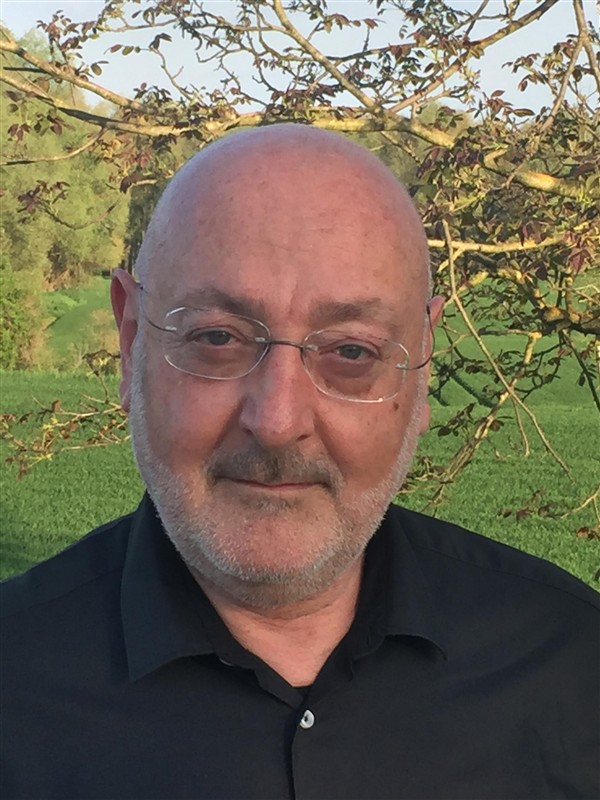 Giacomo Mauro D'ArianoUniversity of PaviaQuantum information foundations of physics, deriving quantum theory from informational axioms, Quantum Information Panpsychism with Federico Faggin
-
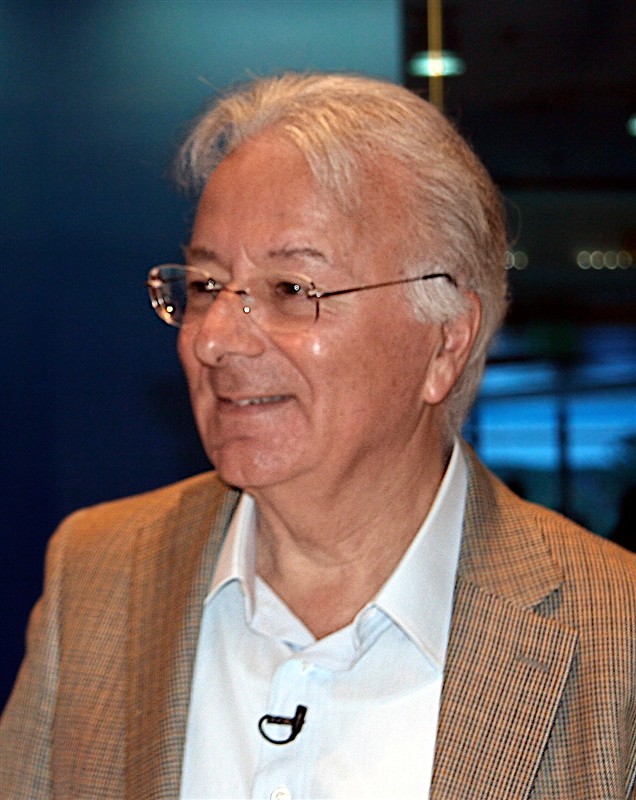 Federico FagginFederico and Elvia Faggin FoundationInventing the microprocessor, Quantum Information Panpsychism, Irreducible, the argument that classical computers cannot be conscious
- Matthew FisherUniversity of California, Santa BarbaraQuantum cognition via nuclear spins, phosphorus as a neural qubit, Posner molecules, condensed matter physics applied to the brain
Andrei Khrennikov is listed with the other quantum theorists, who hold that consciousness depends on physics classical computers do not reproduce. The theory family behind that position is set out in the index of consciousness theories. Every researcher covered on this site is indexed in the directory of consciousness researchers.