

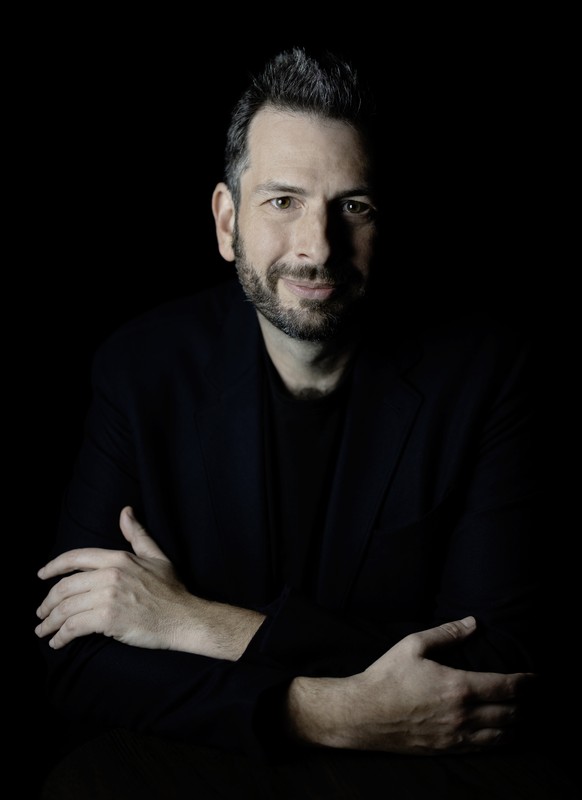
David Eagleman
Department of Psychiatry and Behavioral Sciences, Stanford University
Functionalist What matters is the organisation of the processing, not the material
David M. Eagleman is a neuroscientist in the Department of Psychiatry and Behavioral Sciences at Stanford University and CEO of Neosensory. His empirical research investigates how the brain constructs subjective time, integrates multisensory inputs, and rewires cortical territory in response to novel sensory streams.
In his landmark 2000 Science paper with Terrence J. Sejnowski, Motion integration and postdiction in visual awareness (Science 287(5460):2036-2038), Eagleman resolved the flash-lag illusion by proving that conscious visual perception is neither instantaneous nor purely predictive extrapolation. Instead, visual awareness is postdictive, meaning the perceptual attribution of where a moving object was at the moment of a flash is determined by motion trajectories occurring during an integration window of roughly 80 milliseconds after the flash.
Eagleman’s work directly supports functionalist and recurrent models of emerging consciousness. Both his postdictive timing studies and his “livewired” sensory substitution experiments show that cortical tissue does not rely on fixed, modality-specific biological hardwiring. Recurrent circuits dynamically synchronize delayed asynchronous inputs into a unified temporal present regardless of the peripheral transducer.
Known for. Postdiction and the 80-millisecond visual integration window (with Terrence Sejnowski), time perception, sensory substitution and livewired neural plasticity
Coverage on this site
- Why Visual Awareness Lags by 80 Milliseconds in Eagleman, Sejnowski and Schurger's Timing Models November 2026
Related researchers
- Terrence J. SejnowskiComputational Neurobiology Laboratory, Salk Institute / UC San DiegoCo-inventor of the Boltzmann Machine, The Computational Brain (1992), Independent Component Analysis (ICA), The Deep Learning Revolution (MIT Press, 2018)
- Benjamin LibetDepartment of Physiology, University of California, San FranciscoReadiness potential and timing of conscious intention (1983), half-second neural adequacy delay for somatosensory awareness, conscious mental field hypothesis
- Aaron SchurgerLPNC, CNRS, Université Grenoble AlpesThe stochastic accumulator model of the readiness potential, critique of causal reading of neural precursors, error and awareness dynamics
- Hedayat AbedijooACE Conscious Studio / IndependentACE.await (2026), the ACE decision framework (Agency, Connection, Exchange)
-
 Blaise Agüera y ArcasGoogle VP and Fellow, CTO of Technology & SocietyComputational functionalism, active inference, on-device neural computing, What Is Intelligence? (2025), and Who Are We Now? (2023)
- Igor AleksanderImperial College LondonAxiomatic Consciousness Theory, neural state machines, The World in My Mind, pioneering neural network engineering
David Eagleman is listed with the other functionalists and computationalists, who hold that what matters is the organisation of the processing, not the material. The theory family behind that position is set out in the index of consciousness theories. Every researcher covered on this site is indexed in the directory of consciousness researchers.