




Jonathan Birch
London School of Economics and Political Science
AI welfare Whatever the metaphysics, uncertainty already creates obligations

Jonathan Birch works on the question the theoretical dispute leaves unanswered, which is what to do in the meantime. His book The Edge of Sentience treats the hard cases together, foetuses, disorders of consciousness, invertebrates and artificial systems, on the grounds that they share a structure. In each, the evidence is insufficient to settle the question and decisions cannot wait.
The LSE Criteria give a practical threshold for identifying a sentience candidate without requiring proof of phenomenal experience, drawing on neurophysiological markers of pain rather than on any single theory. His run-ahead principle then argues that precautionary measures should be in place before the technology arrives, since a framework designed after the fact will be shaped by whatever has already been built.
His centrist position on AI specifically is that both confident camps are overreaching, and that the correct response to genuine uncertainty is a decision procedure rather than a bet. That work is why the welfare literature is now more developed than the detection literature, and it appears in policy documents while the metaphysics remains open.
Known for. The Edge of Sentience, the LSE Criteria, and the run-ahead principle
Coverage on this site
Research Papers and Preprints
- Ginsburg and Jablonka's Unlimited Associative Learning Marks the Origin of Consciousness September 2026
- Willa Lane Nicola Clayton Dimensional Welfare Beyond Pain Sentience AI 2026 August 2026
- Jonathan Birch on the Flicker Hypothesis and What AI Consciousness Might Feel Like July 2026
- Artificial Persons and the Rawlsian Threshold for AI Moral Status July 2026
- The Cost of Caution and Kaczmarek on Over-Attribution of AI Moral Status July 2026
- Timescapes of Non-Human Experience Birch, Seth, and Singhal Map Temporal Consciousness July 2026
- Belief Formation and Meta-Cognitive Monitoring in LLMs and Empirical Support for the HOT-3 Consciousness Indicator June 2026
- Mind in the Machine? CHI 2026 Survey Finds Half of Academics Attribute Consciousness to LLMs May 2026
- Jonathan Birch's AI Consciousness Centrist Manifesto and Two Problems, Two Research Programmes April 2026
- What Will Society Think About AI Consciousness? Caviola, Sebo, and Birch on the Biases That Will Decide April 2026
- Can We Validate AI Consciousness Indicators? The Hard Problem Behind the Checklist April 2026
- What Would AI Consciousness Actually Look Like? The 14-Indicator Checklist Explained March 2026
Articles and Commentary
Related researchers
- Simona GinsburgThe Open University of IsraelUnlimited Associative Learning, minimal consciousness marker, The Evolution of the Sensitive Soul, associative learning and the Cambrian explosion
- Eva JablonkaTel Aviv UniversityUnlimited Associative Learning as a marker for the origin of consciousness, The Evolution of the Sensitive Soul, evolution of meaning and epigenetic inheritance
- Willa LaneDepartment of Psychology, University of CambridgeDimensional welfare assessment frameworks, comparative sentience beyond pain, animal and AI welfare ethics (2026, with Nicola Clayton)
- Nicola S. ClaytonDepartment of Psychology, University of CambridgeComparative cognition, episodic-like memory in corvids, mental time travel in animals, Fellow of the Royal Society (FRS)
-
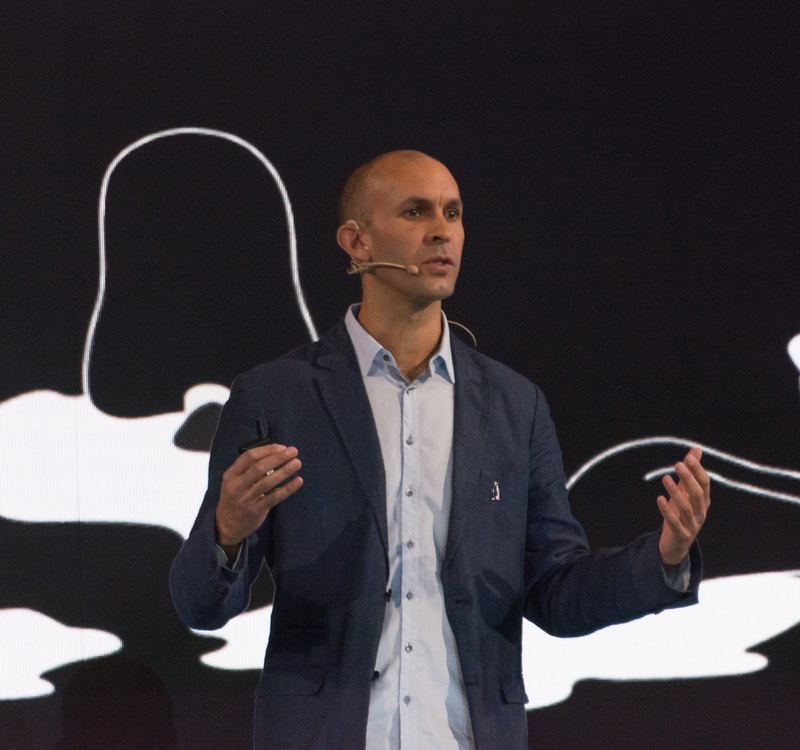 Anil SethSussex Centre for Consciousness Science, University of SussexThe beast machine hypothesis, and controlled hallucination as an account of perception
- Patrick ButlinEleos AI Research. Previously the Global Priorities Institute, OxfordLead author of the indicator properties framework for assessing consciousness in AI systems
Jonathan Birch is listed with the other welfare and moral status researchers, who hold that whatever the metaphysics, uncertainty already creates obligations. The positions themselves are set out in the index of consciousness theories. Every researcher covered on this site is indexed in the directory of consciousness researchers.