


Grace Lindsay
New York University
Integrated information Consciousness is intrinsic causal power, measured as integrated information
Grace Lindsay is a computational neuroscientist at New York University’s Center for Data Science and Department of Psychology, and the author of Models of the Mind, How Physics and Engineering Have Shaped Neuroscience (Bloomsbury, 2021), one of the clearest accounts of how quantitative modeling disciplines brain science. Her research program targets attention and awareness in recurrent neural systems, asking which computational signals distinguish attended, reportable processing from background computation, the question her box on attention addressed in the Butlin and Long indicator report she co-authored, examined on this site in the nineteen researcher checklist.
Her published work measures how recurrent dynamics and noise shape perception in both artificial and biological networks, treating the two substrates as instances of one modeling problem. That stance carries a quiet thesis. The mathematical vocabulary of attention and recurrence applies across substrates, which is precisely the assumption the AI consciousness assessment program needs and the position this site’s functionalist emergentism endorses.
Lindsay’s role in the database is the modeling bridge. She belongs to the generation of researchers whose careers move fluently between neural simulation and machine learning, and whose work supplies the computational-level language in which consciousness claims become testable on either substrate.
Known for. Computational neuroscience of attention and consciousness, Models of the Mind, indicator properties for AI, recurrent network dynamics
Coverage on this site
Related researchers
- Patrick ButlinEleos AI Research. Previously the Global Priorities Institute, OxfordLead author of the indicator properties framework for assessing consciousness in AI systems
- Robert LongEleos AI Research (Executive Director)AI welfare research, the 14 indicator framework for AI consciousness assessment, the Eleos Conference on AI Consciousness and Welfare
-
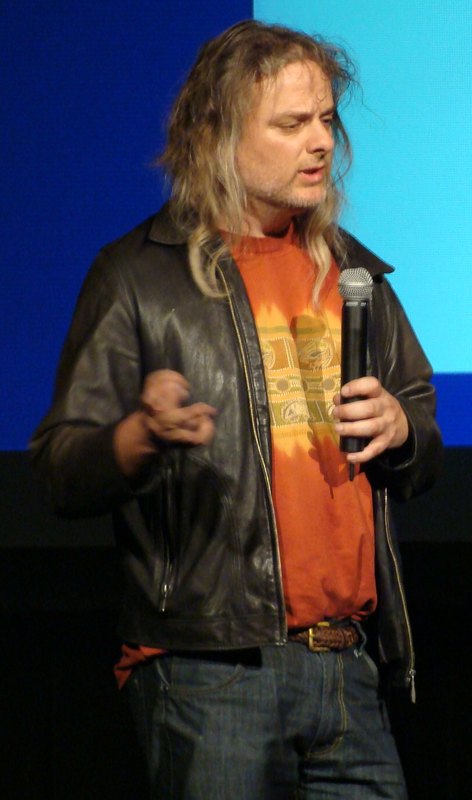 David ChalmersNew York University. Co-director, Center for Mind, Brain and ConsciousnessNaming the hard problem of consciousness, and the philosophical zombie argument
- Karl FristonUniversity College London. Chief Scientist, VERSES AIThe free energy principle and active inference
-
 Jonathan BirchLondon School of Economics and Political ScienceThe Edge of Sentience, the LSE Criteria, and the run-ahead principle
-
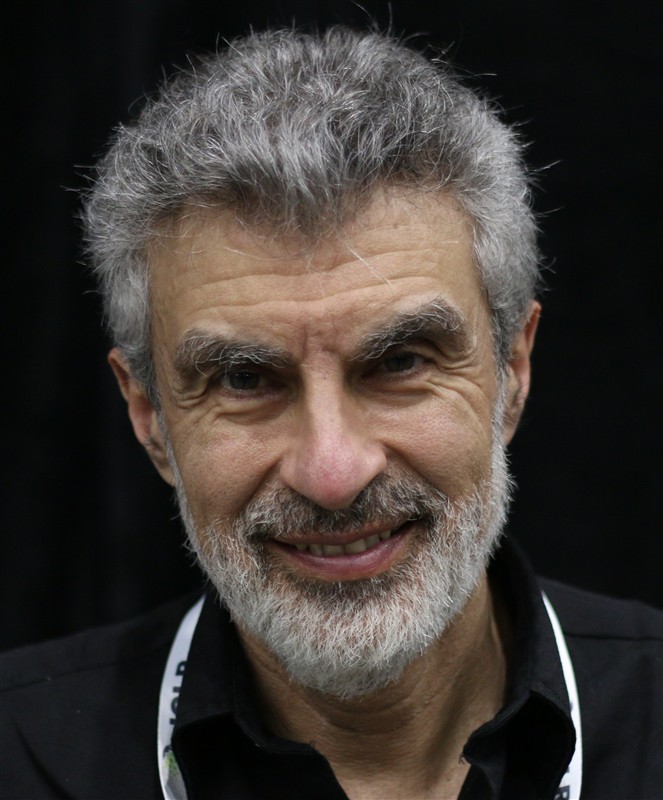 Yoshua BengioMila, Université de MontréalThe Consciousness Prior, deep learning foundations, Turing Award, global workspace-inspired representation learning
Grace Lindsay is listed with the other integrated information theorists, who hold that consciousness is intrinsic causal power, measured as integrated information. The theory family behind that position is set out in the index of consciousness theories. Every researcher covered on this site is indexed in the directory of consciousness researchers.