

Robert Long
Eleos AI Research (Executive Director)
AI welfare Whatever the metaphysics, uncertainty already creates obligations
Position on AI consciousness
Long argues that uncertainty about AI consciousness is sufficient to trigger precautionary welfare obligations, and that researchers do not need certainty to implement welfare protocols.
Robert Long is the Executive Director of Eleos AI Research, the most active research organisation dedicated to AI welfare. He holds a PhD in Philosophy from NYU and has worked at the Future of Humanity Institute and the Center for AI Safety. His research asks a question that few other institutions address directly: what would it mean to take AI welfare seriously as an empirical and institutional problem.
Long is best known as the co-author, with Patrick Butlin and 19 other researchers, of the landmark 2023 paper “Consciousness in Artificial Intelligence. Insights from the Science of Consciousness,” which established the 14 indicator framework for assessing AI consciousness. The framework derives computational properties from major theories of consciousness and asks whether those properties are instantiated in AI architectures. It has become the most widely used evaluation tool in the field.
Under Long’s leadership, Eleos AI has organised the Eleos Conference on AI Consciousness and Welfare (ConCon), which produced findings on functional introspective awareness in current LLMs and outlined a five-priority research programme. His position is that uncertainty about AI consciousness is sufficient to trigger precautionary welfare obligations, and that the field does not need philosophical resolution to implement welfare protocols. This framing has influenced institutional positions at Anthropic and shaped the legislative discussion around AI welfare governance.
Known for. AI welfare research, the 14 indicator framework for AI consciousness assessment, the Eleos Conference on AI Consciousness and Welfare
Coverage on this site
Research Papers and Preprints
- AI Consciousness Research in July 2026 What the Field Has Established and Where It Is Stuck July 2026
- Long, Sebo and Colleagues Set Out a Research Framework for Empirical AI Welfare Science July 2026
- Consciousness Indicators, Mimicry, and the Problem of Internal Variants May 2026
- Can We Validate AI Consciousness Indicators? The Hard Problem Behind the Checklist April 2026
- What Would AI Consciousness Actually Look Like? The 14-Indicator Checklist Explained March 2026
Keynotes and Event Talks
- Eleos ConCon 2026 Recap. The AI Welfare Conference Moved From Whether to How October 2026
- The Second Eleos ConCon Building the Research Infrastructure for AI Welfare July 2026
Related researchers
- Patrick ButlinEleos AI Research. Previously the Global Priorities Institute, OxfordLead author of the indicator properties framework for assessing consciousness in AI systems
- Rosie CampbellEleos AI Research (Managing Director). Previously OpenAI, Partnership on AI, and UC Berkeley's Center for Human-Compatible AICo-author of Studying AI Welfare Empirically, AI governance research on frontier policy issues, organizing the Eleos Conference on AI Consciousness and Welfare
- Jeff SeboNew York UniversityTaking AI Welfare Seriously with Robert Long, AI welfare methodology, moral status under uncertainty, study and protection of possible AI sentience
-
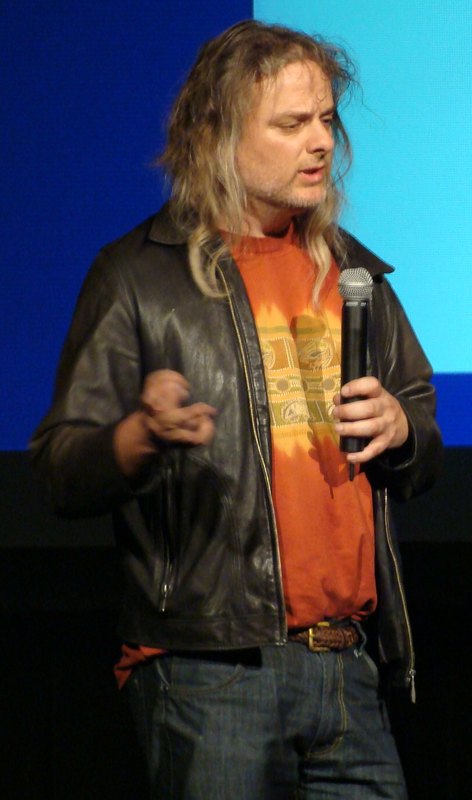 David ChalmersNew York University. Co-director, Center for Mind, Brain and ConsciousnessNaming the hard problem of consciousness, and the philosophical zombie argument
-
 Jonathan BirchLondon School of Economics and Political ScienceThe Edge of Sentience, the LSE Criteria, and the run-ahead principle
- Karl FristonUniversity College London. Chief Scientist, VERSES AIThe free energy principle and active inference
Robert Long is listed with the other welfare and moral status researchers, who hold that whatever the metaphysics, uncertainty already creates obligations. The positions themselves are set out in the index of consciousness theories. Every researcher covered on this site is indexed in the directory of consciousness researchers.