


Harold Saxton Burr
Yale University School of Medicine
Biological naturalist Consciousness requires living metabolic hardware
Position on AI consciousness
Burr proposed that steady electrodynamic fields organize biological form across whole organisms, anticipating modern bioelectric prepattern research while leaving mechanistic details for later ion-channel biology to resolve.
Harold Saxton Burr was a neuroanatomist at Yale University who, together with philosopher F. S. C. Northrop, proposed the electrodynamic theory of life in the 1930s. Over four decades, Burr and his collaborators developed high-impedance vacuum-tube microvoltmeters to record steady voltage gradients without draining current from living tissue.
His laboratory published dozens of measurements showing that steady electric potentials track embryonic axis formation in salamanders, wound healing in humans, growth cycles in trees, and abnormal proliferation in mice. Burr interpreted these standing voltage maps, which he termed L-fields, as organizing templates rather than mere side effects of metabolism.
While Burr lacked modern molecular tools to identify the ion channels and gap junctions generating those voltages, his core empirical observation survived. Contemporary developmental bioelectricity has confirmed that spatial voltage prepatterns precede and guide anatomical remodeling, connecting Burr’s historical archive to current research on non-neural cognition.
Known for. Electrodynamic theory of life and long-term voltage measurements across living organisms
Coverage on this site
- The Forgotten Century of Bioelectricity From E. J. Lund and Harold Saxton Burr to Michael Levin November 2026
Related researchers
- E. J. LundUniversity of Texas at AustinBioelectric Fields and Growth and the electrical control of organic polarity
- Robert O. BeckerSUNY Upstate Medical University and Veterans Administration Hospital, SyracuseElectromagnetism and Life, direct-current control systems, and electrical stimulation of limb regeneration
- Lionel F. JaffePurdue University and Marine Biological Laboratory, Woods HoleInvention of the vibrating probe and quantitative mapping of developmental ionic currents
-
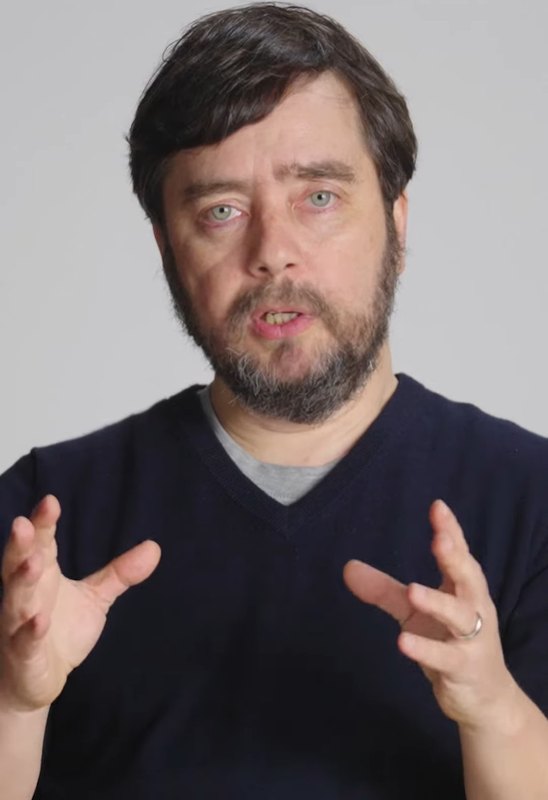 Michael LevinAllen Discovery Center, Tufts UniversityBioelectric signalling, the cognitive light cone, and diverse intelligence
- František BaluškaUniversity of BonnCellular consciousness, subcellular nanobrains, plant neurobiology, sentient cells as units of physiology
- Mark BaronDepartment of Neurology, Beth Israel Deaconess Medical Center and Harvard Medical SchoolBrainstem Theory of Consciousness, subcortical mechanisms of wakefulness, pain, and anesthesia with Marshall Devor
Harold Saxton Burr is listed with the other biological naturalists, who hold that consciousness requires living metabolic hardware. The theory family behind that position is set out in the index of consciousness theories. Every researcher covered on this site is indexed in the directory of consciousness researchers.