

Michael Timothy Bennett
School of Computing, Australian National University
Functionalist What matters is the organisation of the processing, not the material
Michael Timothy Bennett investigates the foundations of consciousness and artificial general intelligence from the standpoint of complex systems theory and formal mathematical modeling. Based at the School of Computing at the Australian National University, his research addresses the hard problem of consciousness by examining how subjective experience emerges from the self-organizing dynamics of embodied organisms.
Collaborating with researchers including Sean Welsh and Anna Ciaunica on foundational papers such as “Why Is Anything Conscious?”, Bennett develops formal principles showing that consciousness is not an incidental computational add-on, but an intrinsic consequence of how living systems navigate survival. In Bennett’s framework, biological agents must interpret sensory data through qualitative valence, evaluating inputs as intrinsically advantageous or detrimental to their continuing persistence.
His work on emergent causality and the psychophysical principle of causality seeks to establish rigorous mathematical boundaries between mere functional simulation and genuine phenomenal experience. In examining how to construct conscious machines, Bennett argues that synthetic architectures must incorporate self-referential valuation loops and thermodynamic grounding rather than relying solely on feedforward pattern recognition.
Known for. Mathematical foundations of emergent causality, valence-driven self-organization, and 'Why Is Anything Conscious?'
Coverage on this site
- Michael Timothy Bennett on Emergent Causality and Biological Valence August 2026
- Stack Theory in Practice How Perrier and Bennett Measure LM Agent Identity May 2026
Related researchers
- Hedayat AbedijooACE Conscious Studio / IndependentACE.await (2026), the ACE decision framework (Agency, Connection, Exchange)
-
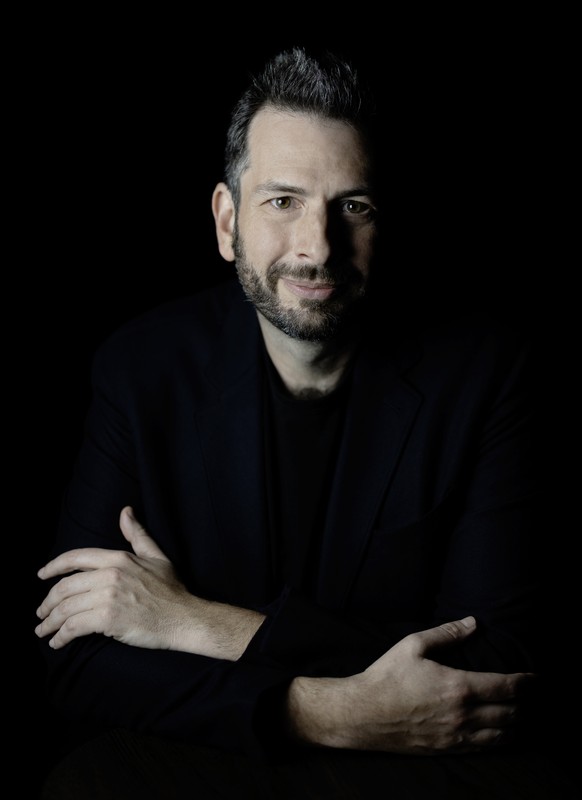 Blaise Agüera y ArcasGoogle VP and Fellow, CTO of Technology & SocietyComputational functionalism, active inference, on-device neural computing, What Is Intelligence? (2025), and Who Are We Now? (2023)
- Igor AleksanderImperial College LondonAxiomatic Consciousness Theory, neural state machines, The World in My Mind, pioneering neural network engineering
-
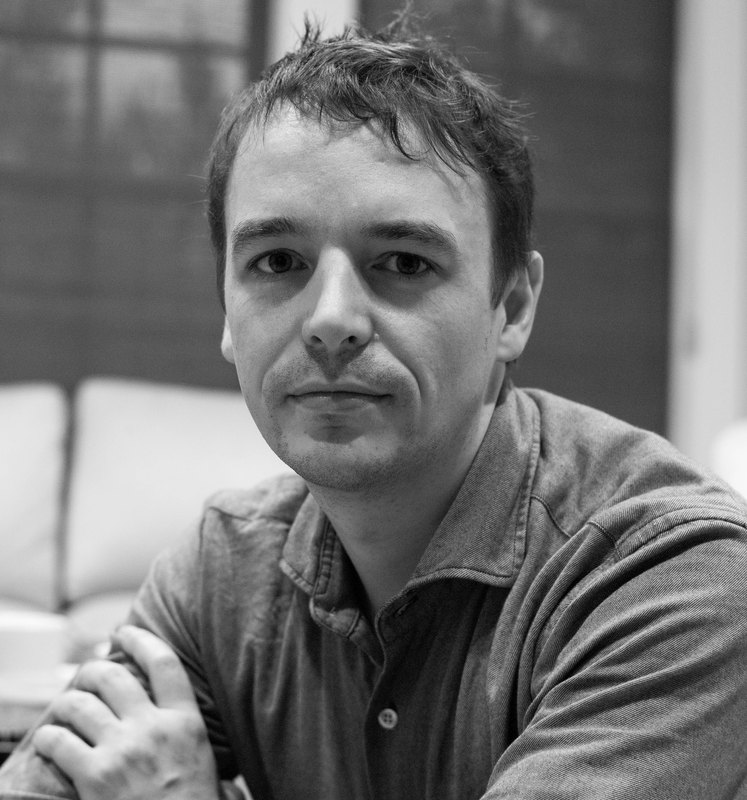 Joscha BachCalifornia Institute for Machine ConsciousnessThe machine consciousness hypothesis, cyber animism, and MicroPsi
- Talis BachmannUniversity of TartuAttention-awareness theory, the preactivation hypothesis for conscious perception, masking and the microgenesis of awareness, perception without awareness
- Adam BalesAustralian National UniversityDecision-theoretic and normative methodology, co-author of the cacophony assessment framework
Michael Timothy Bennett is listed with the other functionalists and computationalists, who hold that what matters is the organisation of the processing, not the material. The theory family behind that position is set out in the index of consciousness theories. Every researcher covered on this site is indexed in the directory of consciousness researchers.