

Rolf Landauer
IBM Thomas J. Watson Research Center (1927-1999)
Builder The claim is about what the hardware does, and the philosophy is left open
Rolf Landauer was a physicist at the IBM Thomas J. Watson Research Center whose work established the physical thermodynamics of information processing and quantum transport in disordered conductors. Against the mid-twentieth-century view that computation was an abstract mathematical operation independent of its physical carrier, Landauer argued that information is always encoded in physical degrees of freedom and is bound by statistical mechanics.
In July 1961 he published Irreversibility and Heat Generation in the Computing Process in the IBM Journal of Research and Development. By analyzing a bistable potential well coupled to a thermal bath at temperature $T$, he proved that any logically irreversible operation that erases one bit of information compresses the phase space of the computing device by a factor of two and must dissipate at least $k_B T \ln 2$ of heat into the environment, about $2.87 \times 10^{-21}\text{ J}$ at $300\text{ K}$. Conversely, logically reversible and conservative wave transformations, such as unitary optical interference in a lossless waveguide mesh, have no fundamental thermodynamic energy floor per linear step until an irreversible readout or state reset occurs. Landauer’s bound is the baseline equation for the Thermodynamic Computing section, the photonic-thermodynamic substrate blueprint, and Photonic Thermodynamic Substrates, Coherent Ising Machines and Oscillatory Binding Near the Speed of Light.
He is covered here under the Builder position for the physical law governing computation and heat dissipation. No theory of consciousness is attributed to him.
Known for. Landauer's principle, the thermodynamic minimum heat generation of k_B T ln 2 per erased bit of information (IBM Journal of Research and Development, 1961)
Coverage on this site
- Photonic Thermodynamic Substrates, Coherent Ising Machines and Oscillatory Binding Near the Speed of Light November 2026
Related researchers
-
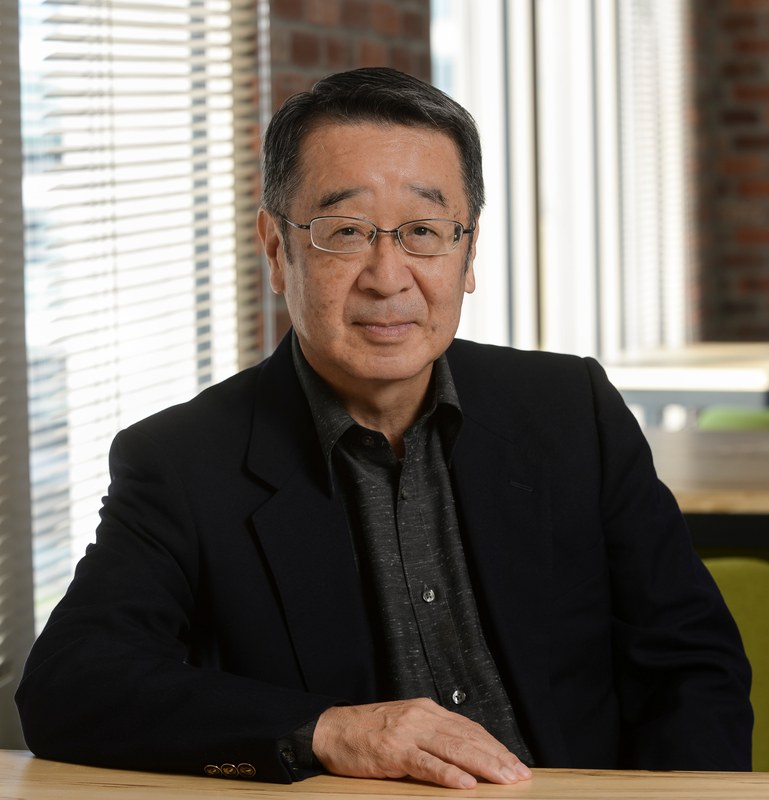 Yoshihisa YamamotoProfessor Emeritus of Applied Physics and Electrical Engineering, Stanford University; NTT Research Physics and Informatics LaboratoriesCoherent Ising Machines built from degenerate optical parametric oscillators (Science, 2016), quantum optics of semiconductor microcavities, and exciton-polariton condensates
- Takahiro InagakiNTT Basic Research Laboratories, NTT CorporationFirst author of the 2,000-node Coherent Ising Machine demonstration using time-division-multiplexed optical parametric oscillators (Science, 2016)
-
 Marin SoljačićProfessor of Physics, Massachusetts Institute of TechnologyCoherent nanophotonic Mach-Zehnder interferometer circuits for optical matrix multiplication (Nature Photonics, 2017), photonic crystals, and nonlinear nanophotonics
- Yichen ShenDepartment of Physics, Massachusetts Institute of Technology; Co-founder, LightelligenceFirst author of the coherent nanophotonic Mach-Zehnder interferometer processor paper (Nature Photonics, 2017) and commercial optical inference accelerators
- Wolfram PerniceProfessor of Experimental Physics, Kirchhoff Institute for Physics, Heidelberg University; University of MünsterAll-optical spiking neurosynaptic networks using phase-change chalcogenide (GST) waveguide synapses (Nature, 2019) and integrated superconducting nanophotonics
- Johannes FeldmannInstitute of Physics, University of Münster; Department of Materials, University of OxfordFirst author of the all-optical spiking neurosynaptic network with phase-change Ge2Sb2Te5 synapses and microring resonators (Nature, 2019)
Rolf Landauer is listed with the other builders, who hold that the claim is about what the hardware does, and the philosophy is left open. The positions themselves are set out in the index of consciousness theories. Every researcher covered on this site is indexed in the directory of consciousness researchers.