


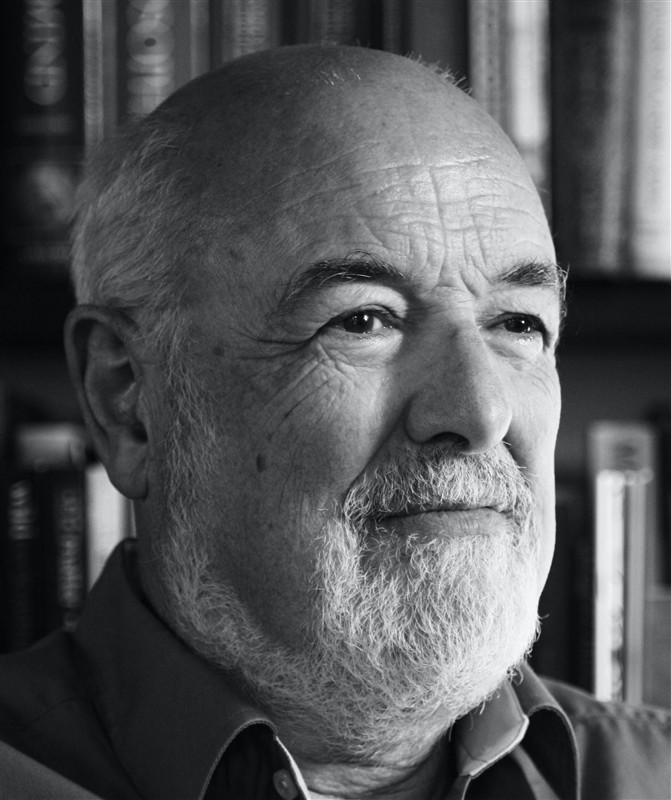
Chris Frith
University College London
Functionalist What matters is the organisation of the processing, not the material

Chris Frith, Emeritus Professor at the Wellcome Centre for Human Neuroimaging at University College London, is one of the founders of cognitive neuroimaging and a central figure in the study of agency and self-awareness. His book Making Up the Mind, How the Brain Creates Our Mental World (Blackwell, 2007) argues that the brain is a hypothesis-testing machine whose experienced world is a model of its own making, and his experimental work on agency showed how the brain distinguishes self-caused from other-caused events, the distinction whose minimal implementation this site tracks in the spiking agent behavioral self analysis.
Frith is a co-author of the Butlin and Long indicator-properties report, this site’s nineteen researcher checklist, contributing the agency, metacognition, and social-cognition perspective to the indicator set. The collaboration’s higher-order and agency indicators descend from the research program he helped build, in which monitoring one’s own states and modeling other minds are two sides of one architecture.
His position defends the social and predictive character of experience. What a mind knows directly is its own model, and other minds are known through the same machinery. That thesis has aged into the mainstream of both consciousness science and machine self-model research, and this site’s coverage of introspective AI evidence rests on it.
Known for. Agency and the sense of self, Making Up the Mind, metacognition and awareness, indicator properties collaboration
Coverage on this site
- From Cacophony to Hierarchy. The 14-Author Framework for Assessing AI Consciousness October 2026
- What Would AI Consciousness Actually Look Like? The 14-Indicator Checklist Explained March 2026
Related researchers
- Shamil ChandariaGoogle DeepMind Institute; University of Oxford; Max Planck UCL Centre for Computational PsychiatryFree energy principle and active inference, the Beautiful Loop theory, the Complex Brain Hypothesis, lead author of the From Cacophony to Hierarchy AI consciousness assessment framework
-
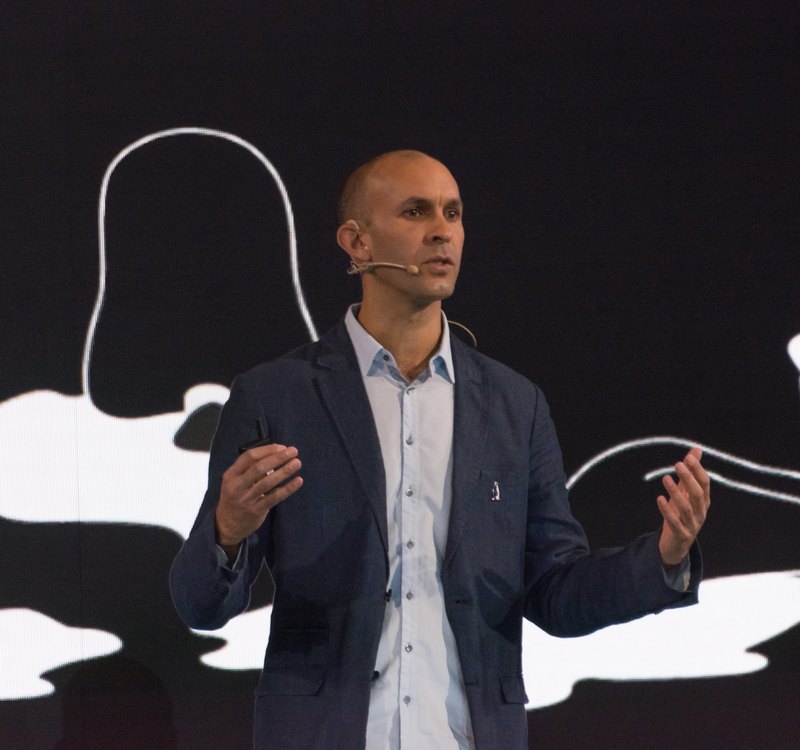 Anil SethSussex Centre for Consciousness Science, University of SussexThe beast machine hypothesis, and controlled hallucination as an account of perception
- Fernando E. RosasUniversity of Sussex, Imperial College London, University of Oxford, and PIBBSSCorresponding author of the BBS commentary on compatibilist emergence
- Murray ShanahanImperial College LondonGlobal workspace style cognitive architectures, Embodiment and the Inner Life, indicator properties for AI consciousness, LLM world models
- Morten KringelbachDepartment of Psychiatry, University of Oxford; Centre for Eudaimonia and Human Flourishing, Linacre College, Oxford; Department of Clinical Medicine, Aarhus UniversityWhole-brain computational modeling of non-equilibrium brain dynamics, the thermodynamics of mind framework, hedonic and pleasure circuitry
- Henry ShevlinGoogle DeepMind Institute; Leverhulme Centre for the Future of Intelligence, University of CambridgeResearch on AI consciousness and welfare assessment, the moral uncertainty programme at Cambridge, co-author of the cacophony assessment framework
Chris Frith is listed with the other functionalists and computationalists, who hold that what matters is the organisation of the processing, not the material. The theory family behind that position is set out in the index of consciousness theories. Every researcher covered on this site is indexed in the directory of consciousness researchers.