


Shamil Chandaria
Google DeepMind Institute; University of Oxford; Max Planck UCL Centre for Computational Psychiatry
Shamil Chandaria is a researcher at the Max Planck UCL Centre for Computational Psychiatry and the University College London, working on the application of the free energy principle and active inference to contemplative neuroscience. His work uses the mathematics of belief updating and precision weighting to model states of meditation, psychedelic experience, and minimal phenomenal experience.
In 2026 he co-authored “The Complex Brain Hypothesis” (arXiv:2605.16146) with Jonas Mago, Edmundo Lopez-Sola, Jakub Vohryzek, Michael Lifshitz, Robin Carhart-Harris, and Karl Friston. The paper resolves a conundrum in the entropic brain hypothesis by proposing that the richness of experience is better indexed by complexity than by entropy, with minimal phenomenal experiences and high-content psychedelic experiences representing two different grains of inference.
Chandaria’s framework is actively predictive, modeling conscious experience as a function of the precision and grain with which the brain resolves uncertainty, which connects directly to the predictive processing tradition this site tracks.
Known for. Free energy principle and active inference, the Beautiful Loop theory, the Complex Brain Hypothesis, lead author of the From Cacophony to Hierarchy AI consciousness assessment framework
Coverage on this site
- From Cacophony to Hierarchy. The 14-Author Framework for Assessing AI Consciousness October 2026
- The Complex Brain Hypothesis and why contentless awareness still shows high brain entropy August 2026
Related researchers
-
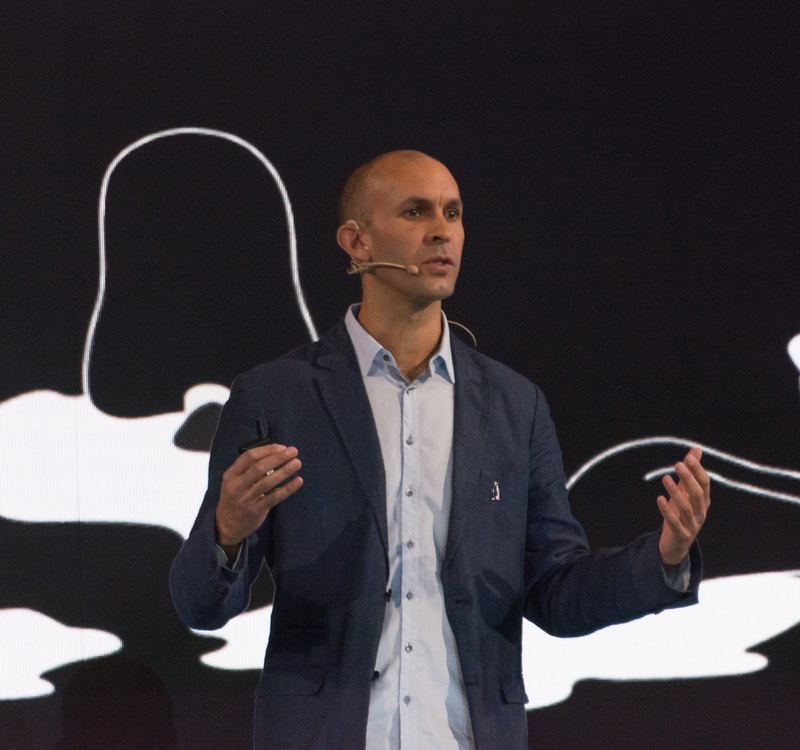 Anil SethSussex Centre for Consciousness Science, University of SussexThe beast machine hypothesis, and controlled hallucination as an account of perception
- Fernando E. RosasUniversity of Sussex, Imperial College London, University of Oxford, and PIBBSSCorresponding author of the BBS commentary on compatibilist emergence
- Murray ShanahanImperial College LondonGlobal workspace style cognitive architectures, Embodiment and the Inner Life, indicator properties for AI consciousness, LLM world models
-
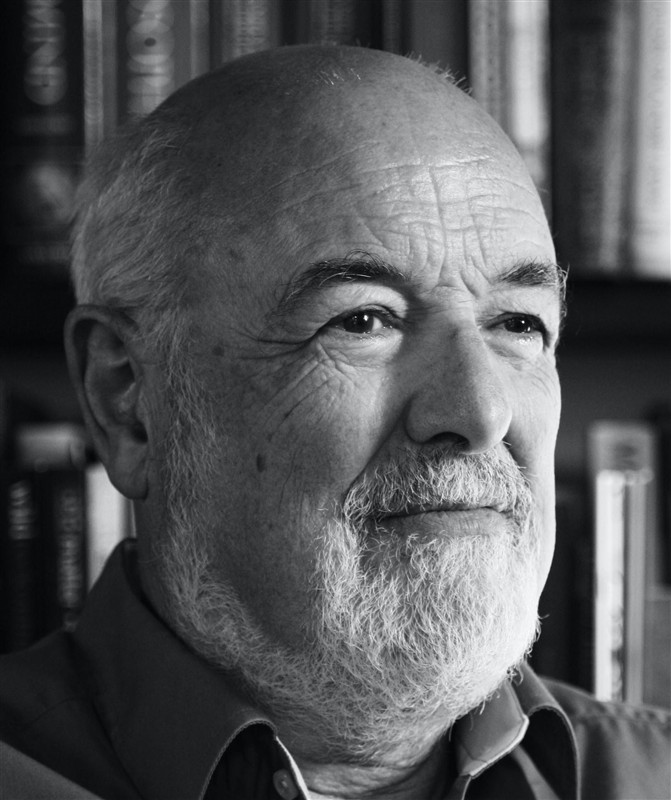 Chris FrithUniversity College LondonAgency and the sense of self, Making Up the Mind, metacognition and awareness, indicator properties collaboration
- Morten KringelbachDepartment of Psychiatry, University of Oxford; Centre for Eudaimonia and Human Flourishing, Linacre College, Oxford; Department of Clinical Medicine, Aarhus UniversityWhole-brain computational modeling of non-equilibrium brain dynamics, the thermodynamics of mind framework, hedonic and pleasure circuitry
- Henry ShevlinGoogle DeepMind Institute; Leverhulme Centre for the Future of Intelligence, University of CambridgeResearch on AI consciousness and welfare assessment, the moral uncertainty programme at Cambridge, co-author of the cacophony assessment framework
Every researcher covered on this site is indexed in the directory of consciousness researchers.