



From Cacophony to Hierarchy. The 14-Author Framework for Assessing AI Consciousness
The AI consciousness field has a measurement problem that comes before any instrument. Its theories disagree, so any assessment inherits the disagreements, and most published evaluations quietly pick one theory and call the result a verdict. A 150 page framework posted to arXiv on September 28, 2026 by Shamil Chandaria, Arvo Muñoz Morán, Fernando Rosas, Anil Seth, Henry Shevlin, Marcus Hutter, Thore Graepel, Adam Bales, Iulia Comsa, Murray Shanahan, Ruben Laukkonen, Morten Kringelbach, Chris Frith, and Shane Legg tries to replace that habit with an explicit machine. Its title names the ambition, From cacophony to hierarchy (arXiv:2609.35618v2), and its output is not a verdict but a credence. In the paper’s illustrative runs, the same language model receives a consciousness probability of 0.397 under one reading of the evidence and 0.005 under another, and 0.793 once the weighting over theories is changed. The authors argue that this sensitivity is the honest result, not a failure.
The author list is itself a statement. Eight names are at Google DeepMind, including Legg, one of the company’s co-founders, and the rest sit at Oxford, Sussex, UCL, Aarhus, ANU and Cambridge, with Seth’s Sussex Centre for Consciousness Science and Kringelbach’s Oxford centre alongside them. The site has covered parts of this collaboration before, from the Beautiful Loop active inference theory by Laukkonen, Friston and Chandaria to the Complex Brain Hypothesis that Chandaria co-authored. The new paper is the group’s measurement layer, and it is built to be reapplied as evidence accumulates rather than to be run once.
Five levels of functional description
The framework’s spine is a hierarchy of five levels of functional description, adapted from Marr’s levels of analysis. Each level answers a different question about a system, and each supervenes on the one below, which the authors render as a staircase.
- The behavioural level. What does the system do, described purely by inputs and outputs, with no claim about internal workings.
- The computational functional level. What algorithms does it run, abstracted away from the hardware that implements them.
- The intrinsic causal structure functional level. What causal organisation does the physical implementation have, in the sense of each part’s capacity to constrain and be constrained by the others.
- The organismic functional level. Is it a self-maintaining system that senses its own condition and does ongoing work against entropy.
- The organism-environment functional level. Is the coupling between system and world the right kind, where consciousness is treated as a property of an interaction rather than of a thing.
The staircase direction is the framework’s central structural claim. A system satisfying the fine-grained organisation of a higher level makes the coarse-grained organisation below it probable, while satisfying the coarse-grained level says very little about the finer grain. Scaled to probability, this is supervenience read in one direction only, and the paper makes the asymmetry load-bearing for every result that follows.
Where the major theories sit
Each major theory of consciousness is positioned by the level it treats as critical.
| Level | Theory family | Named examples in the paper |
|---|---|---|
| 1 Behavioural | Analytic behaviourism | if it acts conscious, it is conscious |
| 2 Computational | Computational functionalism | Global Workspace Theory, Higher-Order Thought, Attention Schema, Predictive Processing, Recurrent Processing |
| 3 Intrinsic causal structure | IIT and its intrinsic-scale readings | Integrated Information Theory as the paradigm case |
| 4 Organismic | Organismic functionalism | Damasio, Seth, Barrett, Solms |
| 5 Organism-environment | Enactivist and 4E theories | consciousness as organism-world coupling |
Two features of this table deserve notice. First, theories with the same empirical content receive different placements depending on their philosophical interpretation, so Recurrent Processing, Global Workspace and Predictive Processing all have a level 2 reading and a level 3 reading. Second, the views that restrict which physical realisers can host consciousness at all, Searle’s biological naturalism, quantum theories, electromagnetic field accounts and the like, are not a sixth level. The paper treats them as cross-cutting realisability constraints that can bind at any level, which is why Seth’s biological case for consciousness and an enactivist position can both live inside one framework without either adjudicating the other.
The Bayesian mechanism
The machinery takes two inputs and returns one number. The first input is a credence distribution over the five levels, set by philosophical argument and held separate from the evidence. The second is a set of 37 indicator activations, distributed 9 at the behavioural level, 7 at the computational level, 7 at the intrinsic causal-structural level, 6 at the organismic level and 8 at the organism-environment level, each carrying true-positive and false-positive rates inherited from the Digital Consciousness Model dataset as a first approximation. A noisy-or staircase chain links the level nodes, and under a strict supervenience setting only six staircase configurations carry any probability mass. The output is a credence-weighted average of per-level posteriors, computed by exact enumeration rather than sampling.
Treating indicators as evidence with likelihood ratios, rather than as necessary or sufficient conditions, is what lets the framework absorb rival theories without pretending they agree. The face checks behave as expected, a human at 1.000, a thermostat at 0.000, a fly at 0.913, which is the calibration any assessment tool should show before it is pointed at anything controversial.
What the framework says about current LLMs
The illustrative assessments are the paper’s most quoted numbers. An optimist profile for a contemporary language model, with near-complete behavioural indicators and most computational ones satisfied but the upper levels failing, yields 0.397. A sceptic profile that accepts only the consciousness-Turing-test indicators yields 0.005. Weighting credence heavily on the two lower levels lifts the optimist profile to 0.793, while weighting it on the organismic and organism-environment levels drops it to 0.099. The paper is explicit that this range is not an empirically established probability of consciousness for any system. It is a demonstration that the verdict depends as much on where theoretical credence is placed as on how the evidence is read, and that the gap between the two profiles is the kind of disagreement interpretability research could in principle narrow.
That dependency is also why the authors resist collapse into a single number. A 0.79 from a framework whose supervenience runs upward should not be read as evidence that a system is near the top of the staircase, because coarse-grained satisfaction does not transfer credit to the fine grain. The asymmetry does the opposite work. Fine-grained organisation underwrites coarse-grained organisation, never the reverse.
Capability and consciousness candidacy
The framework contains a result the capability community will read closely. The computational-level indicators, information integration, recursivity, world models, self-models, attentional competition, metacognition, are also features that enhance general intelligence. The relation is described as a priori orthogonal but a posteriori correlated, and the consequence runs one way. As systems become more capable, they may satisfy more of the indicator set that several of the placed theories treat as critical, which makes stronger consciousness candidacy a side effect of capability growth under some credence distributions. The paper pairs that with a warning about overattribution pressure, the risk that assessment inflation arrives with the same trend.
Structured agnosticism
The framework’s philosophical stance is named structured agnosticism. It commits to one methodological assumption, that a discoverable psychophysical mapping exists, with experience supervening on organisation. It refuses to adjudicate between the theories it positions, and it outputs aggregated probabilities rather than verdicts. The only positions it excludes are views that deny any discoverable psychophysical mapping, and it excludes them on methodological rather than metaphysical grounds. Setting the hard problem aside is what makes the framework well-posed regardless of ontological commitments. The tractable question the paper inherits is the one the authors associate with Seth’s real problem, which organisational features are associated with which experiential content, and the framework is designed so that credences over that question can move as evidence and arguments land.
Comparison to The Consciousness AI
The framework formalizes a discipline this project’s measurement stack has been applying informally. The Consciousness AI architecture reports a scalar phi value computed from causal gate states in its Global Workspace layer, documented on the architecture page, which is a level 3 measurement produced without any credence structure over levels. The cacophony framework’s verdict on that practice would be that a single-theory scalar is an implicit credence of 1.0 on one level, a commitment the framework exists to make explicit and contestable. Extending the project’s measurement pipeline toward per-level indicator reporting would be the direct analogue, and nothing in the current architecture documentation claims it. The flagship field survey tracks how the field’s instruments are evolving, and this framework is the most formal attempt yet to make theory disagreement a parameter of the measurement rather than a source of noise.
What it changes
Assessment articles on this site have mostly inherited one of two formats, an indicator checklist of the kind Schwitzgebel’s ten features proposed, or a per-theory analysis of the kind the 19-researcher framework assembled. The cacophony framework subsumes both shapes into a probabilistic machine with the theory disagreement as an input dial. Its epistemic neighbours on this site are McClelland’s argument that the uncertainty may be permanent, which it converts into an explicit credence structure rather than a counsel of silence, and the calibration critique of applying uncalibrated markers to artificial systems, which the 37 likelihood ratios are a first answer to. The interactive implementation is public at the project tool page with the code repository, so the credence dial can be turned by anyone willing to state their weights. The framework’s second version also carries a visible trace of field review, with bibliography corrections flagged by Eric Hoel, which is the kind of friction that suggests the paper is being read where it counts.
Researchers covered here
- Shamil ChandariaGoogle DeepMind Institute; University of Oxford; Max Planck UCL Centre for Computational PsychiatryFree energy principle and active inference, the Beautiful Loop theory, the Complex Brain Hypothesis, lead author of the From Cacophony to Hierarchy AI consciousness assessment framework
-
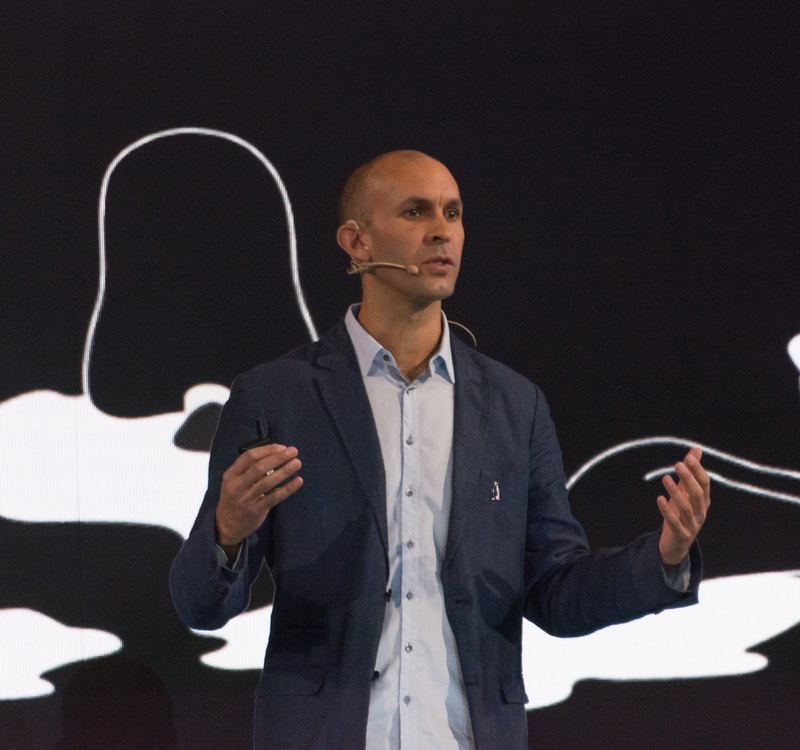 Anil SethSussex Centre for Consciousness Science, University of SussexThe beast machine hypothesis, and controlled hallucination as an account of perception
- Fernando E. RosasUniversity of Sussex, Imperial College London, University of Oxford, and PIBBSSCorresponding author of the BBS commentary on compatibilist emergence
- Murray ShanahanImperial College LondonGlobal workspace style cognitive architectures, Embodiment and the Inner Life, indicator properties for AI consciousness, LLM world models
-
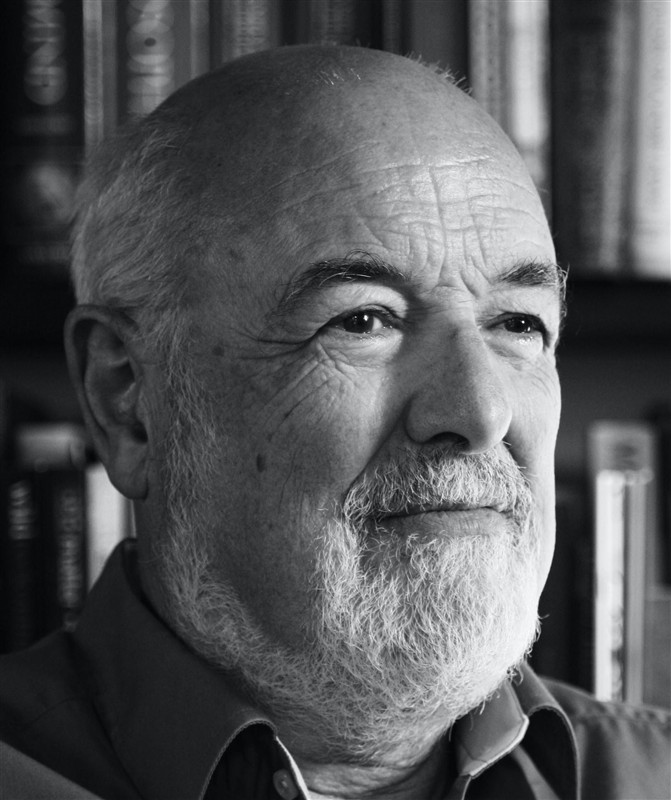 Chris FrithUniversity College LondonAgency and the sense of self, Making Up the Mind, metacognition and awareness, indicator properties collaboration
- Morten KringelbachDepartment of Psychiatry, University of Oxford; Centre for Eudaimonia and Human Flourishing, Linacre College, Oxford; Department of Clinical Medicine, Aarhus UniversityWhole-brain computational modeling of non-equilibrium brain dynamics, the thermodynamics of mind framework, hedonic and pleasure circuitry
- Henry ShevlinGoogle DeepMind Institute; Leverhulme Centre for the Future of Intelligence, University of CambridgeResearch on AI consciousness and welfare assessment, the moral uncertainty programme at Cambridge, co-author of the cacophony assessment framework
- Marcus HutterGoogle DeepMindAIXI and universal artificial intelligence, algorithmic theories of intelligence and rational agency, co-author of the cacophony assessment framework
- Thore GraepelGoogle DeepMindComputational game theory and QD Games, DeepMind research leadership, co-author of the cacophony assessment framework
- Shane LeggGoogle DeepMindCo-founder of Google DeepMind, mathematical definitions of intelligence with Marcus Hutter, AGI forecasting, co-author of the cacophony assessment framework
- Ruben LaukkonenCentre for Eudaimonia and Human Flourishing, University of OxfordA Beautiful Loop, the active inference theory of consciousness with Friston and Chandaria, research on insight and belief updating
- Adam BalesAustralian National UniversityDecision-theoretic and normative methodology, co-author of the cacophony assessment framework
- Iulia ComsaGoogle DeepMindCo-author of the cacophony assessment framework for AI consciousness
- Arvo Muñoz MoránAI Cognition Institute; Rethink PrioritiesBuilding the interactive implementation and public code for the cacophony AI consciousness assessment framework