
Henry Shevlin
Google DeepMind Institute; Leverhulme Centre for the Future of Intelligence, University of Cambridge
Functionalist What matters is the organisation of the processing, not the material
Position on AI consciousness
Shevlin holds that AI consciousness assessment must remain explicit about theory disagreement and moral stakes, producing structured credences rather than verdicts, which is the stance the 2026 cacophony framework formalises.
Henry Shevlin’s research sits at the junction of AI consciousness assessment and the welfare questions that follow from it. At Cambridge’s Leverhulme Centre for the Future of Intelligence he built a research line on moral uncertainty about AI minds, asking what institutions should do when the best available theories of consciousness give conflicting verdicts about the same system. His published argument is that assessment methodology has to carry its theory disagreement on its surface rather than resolving it by stipulation, because any stipulated choice would silently decide moral status questions for systems that may differ from the theory’s biological template.
The 2026 framework paper he co-authored with thirteen colleagues from Google DeepMind, Oxford and Sussex, From Cacophony to Hierarchy, is the formal expression of that stance. The framework places each major theory of consciousness at a level of functional description, combines indicator evidence with credences over those levels, and outputs probabilities rather than verdicts. Shevlin’s contribution to the collaboration carries the assessment-ethics orientation of his earlier work into the measurement layer, where the same disagreement becomes an explicit input dial instead of a hidden assumption.
That position places him in the functionalist family of the site’s taxonomy, since the framework’s single methodological commitment is that experience supervenes on a system’s organisation. It also keeps him adjacent to the welfare programme this site tracks at Eleos AI Research, where assessment under uncertainty is treated as an institutional problem as much as a philosophical one.
Known for. Research on AI consciousness and welfare assessment, the moral uncertainty programme at Cambridge, co-author of the cacophony assessment framework
Coverage on this site
Related researchers
- Shamil ChandariaGoogle DeepMind Institute; University of Oxford; Max Planck UCL Centre for Computational PsychiatryFree energy principle and active inference, the Beautiful Loop theory, the Complex Brain Hypothesis, lead author of the From Cacophony to Hierarchy AI consciousness assessment framework
-
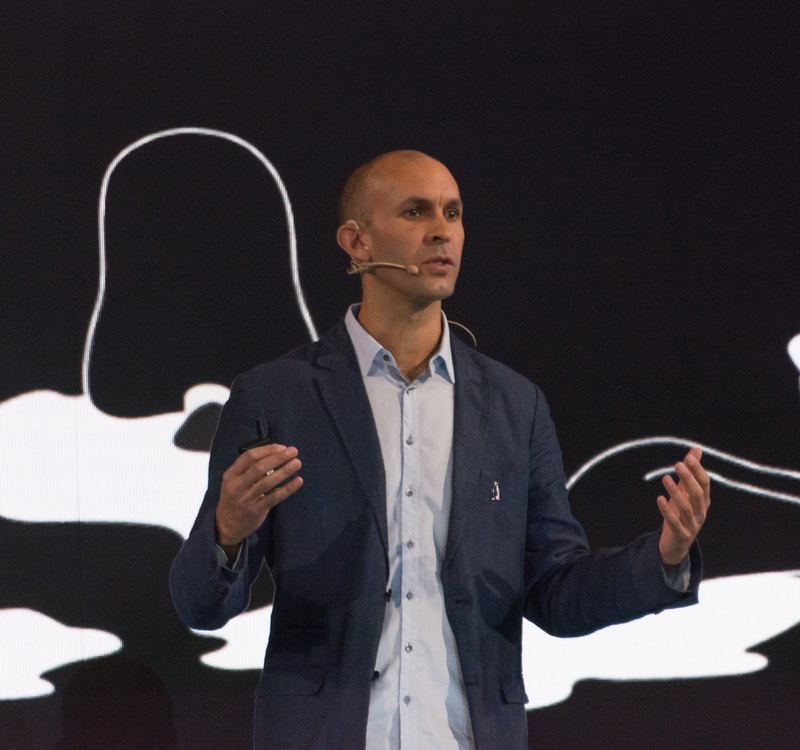 Anil SethSussex Centre for Consciousness Science, University of SussexThe beast machine hypothesis, and controlled hallucination as an account of perception
- Fernando E. RosasUniversity of Sussex, Imperial College London, University of Oxford, and PIBBSSCorresponding author of the BBS commentary on compatibilist emergence
- Murray ShanahanImperial College LondonGlobal workspace style cognitive architectures, Embodiment and the Inner Life, indicator properties for AI consciousness, LLM world models
-
 Chris FrithUniversity College LondonAgency and the sense of self, Making Up the Mind, metacognition and awareness, indicator properties collaboration
- Morten KringelbachDepartment of Psychiatry, University of Oxford; Centre for Eudaimonia and Human Flourishing, Linacre College, Oxford; Department of Clinical Medicine, Aarhus UniversityWhole-brain computational modeling of non-equilibrium brain dynamics, the thermodynamics of mind framework, hedonic and pleasure circuitry
Henry Shevlin is listed with the other functionalists and computationalists, who hold that what matters is the organisation of the processing, not the material. The theory family behind that position is set out in the index of consciousness theories. Every researcher covered on this site is indexed in the directory of consciousness researchers.