


Emmanuel M. Pothos
Department of Psychology, City St George's, University of London
Quantum Consciousness depends on physics classical computers do not reproduce
Emmanuel Pothos is professor of psychology at City St George’s, University of London, and, with Jerome Busemeyer of Indiana University, the co-founder of the quantum cognition research programme. Their 2012 Cambridge University Press monograph, Quantum Models of Cognition and Decision, is the field’s foundational text. The programme’s starting point is empirical. Human judgments show order effects, question-sequence dependencies, and systematic violations of classical probability axioms, and the quantum calculus, which represents beliefs as amplitudes whose squared magnitudes are probabilities, predicts those violations from its structure while classical Bayesian models handle them only with added machinery.
Pothos’s defended position is that the quantum formalism is a better descriptive calculus for cognitive probability than classical probability theory, not a claim about microtubules or neural quantum states. The mathematics is applied at the level of judgment and decision, where interference between incompatible belief bases produces the observed order effects. This separates quantum cognition sharply from quantum consciousness theories such as Orch-OR, and Pothos has been explicit that the programme’s claims are representational and behavioural.
His work is relevant to artificial minds because the formalism is substrate independent. In a 2026 paper with Dorje Brody, Karl Friston, and Bernhard Meister, he co-authored the proof that optimal evidence selection on the square-root probability space is confirmatory, which makes a long-observed human bias a theorem of the representation rather than a defect of it. Any artificial system that samples evidence sequentially under bounded memory faces the same optimality structure, which makes the quantum cognition toolkit directly relevant to how machine reasoning policies should be judged.
Known for. Quantum probability models of human judgment and decision, co-author of Quantum Models of Cognition and Decision
Coverage on this site
Related researchers
- Karl FristonUniversity College London. Chief Scientist, VERSES AIThe free energy principle and active inference
- Harald AtmanspacherCollegium Helveticum / ETH ZurichDual-Aspect Monism (Pauli-Jung conjecture), Quantum Interaction, contextual emergence, Models of Consciousness (MOC) co-organizer
- Anirban BandyopadhyayNational Institute for Materials Science (NIMS), JapanMicrotubule quantum resonance, terahertz oscillations in biology, quantum biology of consciousness
-
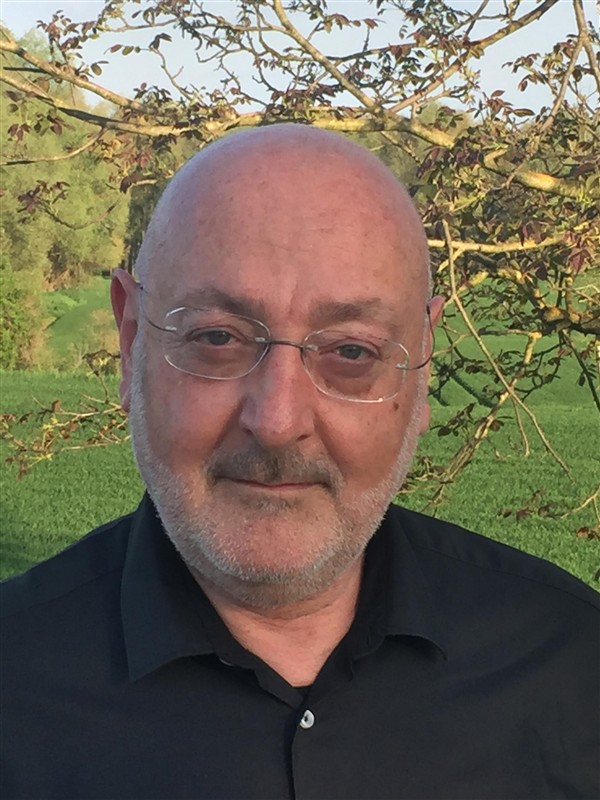 Giacomo Mauro D'ArianoUniversity of PaviaQuantum information foundations of physics, deriving quantum theory from informational axioms, Quantum Information Panpsychism with Federico Faggin
-
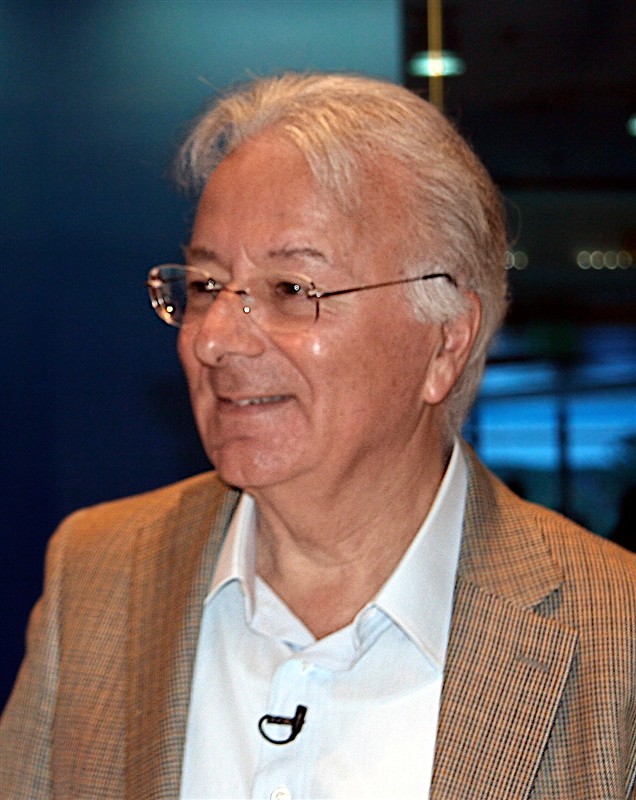 Federico FagginFederico and Elvia Faggin FoundationInventing the microprocessor, Quantum Information Panpsychism, Irreducible, the argument that classical computers cannot be conscious
- Matthew FisherUniversity of California, Santa BarbaraQuantum cognition via nuclear spins, phosphorus as a neural qubit, Posner molecules, condensed matter physics applied to the brain
Emmanuel M. Pothos is listed with the other quantum theorists, who hold that consciousness depends on physics classical computers do not reproduce. The theory family behind that position is set out in the index of consciousness theories. Every researcher covered on this site is indexed in the directory of consciousness researchers.