
Andreas K. Engel
University Medical Center Hamburg-Eppendorf
Functionalist What matters is the organisation of the processing, not the material
Andreas Engel’s position is that conscious sensory awareness is not a byproduct of information processing in any single brain area, but an emergent property of coordinated activity across distributed networks. The mechanism he and Singer proposed is gamma-band synchrony: the temporary coupling of neural assemblies across cortical areas through oscillatory firing in the 30-80 Hz range, with timing precision in the millisecond range. This synchrony serves as a dynamic “binding” signal that tags which distributed representations belong to the same perceptual object or event.
Engel’s subsequent work has extended this framework in two directions. First, toward predictive coding: if perception is an active inference process in which the brain continuously generates predictions and compares them against incoming sensory signals, then the relevant synchrony is not just bottom-up feature binding but the top-down coordination of prediction signals with prediction-error responses. Second, toward embodied and enactive accounts of consciousness: the temporal structure of conscious experience may depend on the temporal structure of action, and the binding window may be partially determined by the body’s own movement dynamics rather than being a fixed neural property.
The practical significance for artificial systems is that Engel’s framework predicts that conscious processing requires both the right temporal dynamics and the right relationship between those dynamics and the system’s interaction with its environment. A system meeting the synchrony criterion but operating without sensorimotor coupling may satisfy one part of the binding requirement while failing another. That is a less fully developed aspect of the temporal binding theory, and it is where Engel’s more recent enactive work and the older synchrony work have yet to be fully reconciled.
Known for. Temporal binding and the neural correlates of sensory awareness, co-author of the landmark 2001 Trends in Cognitive Sciences review with Wolf Singer
Coverage on this site
Related researchers
- Wolf SingerMax Planck Institute for Brain Research, FrankfurtThe temporal binding hypothesis, gamma-band synchrony as the mechanism for conscious feature integration
- Hedayat AbedijooACE Conscious Studio / IndependentACE.await (2026), the ACE decision framework (Agency, Connection, Exchange)
-
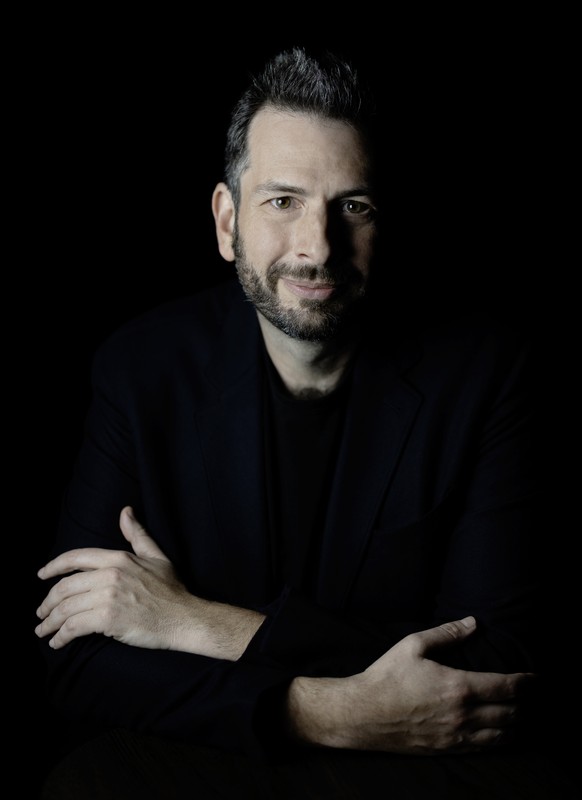 Blaise Agüera y ArcasGoogle VP and Fellow, CTO of Technology & SocietyComputational functionalism, active inference, on-device neural computing, What Is Intelligence? (2025), and Who Are We Now? (2023)
- Igor AleksanderImperial College LondonAxiomatic Consciousness Theory, neural state machines, The World in My Mind, pioneering neural network engineering
-
 Joscha BachCalifornia Institute for Machine ConsciousnessThe machine consciousness hypothesis, cyber animism, and MicroPsi
- Talis BachmannUniversity of TartuAttention-awareness theory, the preactivation hypothesis for conscious perception, masking and the microgenesis of awareness, perception without awareness
Andreas K. Engel is listed with the other functionalists and computationalists, who hold that what matters is the organisation of the processing, not the material. The theory family behind that position is set out in the index of consciousness theories. Every researcher covered on this site is indexed in the directory of consciousness researchers.