
Wolf Singer
Max Planck Institute for Brain Research, Frankfurt
Functionalist What matters is the organisation of the processing, not the material
Wolf Singer argues that the binding problem, the question of how a brain integrating information across distributed cortical areas produces a unified conscious experience rather than a collection of independent representations, is solved by temporal synchrony. Specifically, by the co-ordinated firing of neurons across areas in the gamma-frequency range, approximately 30 to 80 Hz, with precision in the millisecond range. The cycle period of 40 Hz oscillations is 25 milliseconds, and Singer’s account implies that neurons contributing to the same conscious percept must synchronise their firing within that window.
This is a stronger temporal claim than most competing theories make. The Global Neuronal Workspace Theory of Dehaene and Changeux places the key event at around 300 ms after stimulus onset. IIT, as Koch and Tononi have developed it, makes no explicit temporal prediction at all: phi is a property of causal structure, not of oscillatory dynamics. Singer’s 25 ms window is the binding theory’s sharpest constraint on any physical architecture that might instantiate consciousness, and it is the constraint that places real limits on how physically distributed a conscious system can be: at 40 Hz, nodes separated by more than a few milliseconds of propagation delay cannot maintain the phase coherence the theory requires.
Christof Koch, in The Feeling of Life Itself (MIT Press, 2019), argued that gamma synchrony is neither necessary nor sufficient for consciousness, citing cases of conscious perception without gamma synchrony and oscillatory gamma activity without consciousness. That objection has not resolved the dispute: Singer’s group and others continue to find stimulus-dependent gamma coherence correlated with conscious access in human intracranial recordings. The disagreement is partly empirical and partly about what kind of correlation is relevant to identifying a neural mechanism rather than a neural correlate.
Known for. The temporal binding hypothesis, gamma-band synchrony as the mechanism for conscious feature integration
Coverage on this site
Related researchers
- Andreas K. EngelUniversity Medical Center Hamburg-EppendorfTemporal binding and the neural correlates of sensory awareness, co-author of the landmark 2001 Trends in Cognitive Sciences review with Wolf Singer
- Hedayat AbedijooACE Conscious Studio / IndependentACE.await (2026), the ACE decision framework (Agency, Connection, Exchange)
-
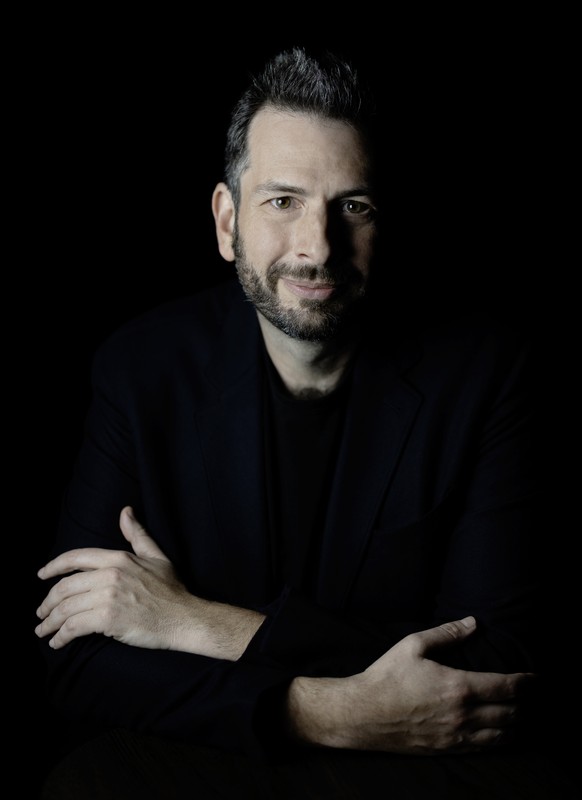 Blaise Agüera y ArcasGoogle VP and Fellow, CTO of Technology & SocietyComputational functionalism, active inference, on-device neural computing, What Is Intelligence? (2025), and Who Are We Now? (2023)
- Igor AleksanderImperial College LondonAxiomatic Consciousness Theory, neural state machines, The World in My Mind, pioneering neural network engineering
-
 Joscha BachCalifornia Institute for Machine ConsciousnessThe machine consciousness hypothesis, cyber animism, and MicroPsi
- Talis BachmannUniversity of TartuAttention-awareness theory, the preactivation hypothesis for conscious perception, masking and the microgenesis of awareness, perception without awareness
Wolf Singer is listed with the other functionalists and computationalists, who hold that what matters is the organisation of the processing, not the material. The theory family behind that position is set out in the index of consciousness theories. Every researcher covered on this site is indexed in the directory of consciousness researchers.