

Andreas Nieder
University of Tübingen
Brain scientist The evidence comes from measured brains, and the AI question is left open
Andreas Nieder is Professor of Animal Physiology at the University of Tübingen. His laboratory studies the cellular neurophysiology of perception, working memory, numerosity and cognitive control in corvid birds, with a focus on the nidopallium caudolaterale (NCL), a nuclear forebrain region functionally comparable to the mammalian prefrontal cortex despite having no six layer laminar structure.
In a landmark 2020 Science study with Lukas Wagener and Paul Rinnert, Nieder trained carrion crows to report whether a faint threshold visual stimulus was present or absent while recording single-neuron activity in the NCL. The recordings separated into two temporal phases. Early activity tracked the physical intensity of the stimulus, while a later sustained phase predicted the crow’s subjective report, even on identical near-threshold trials and false alarms.
For the Alien Consciousness section and the site’s substrate-independence inquiry, Nieder’s findings remove mammalian neocortical lamination from the list of architectural necessities for sensory awareness. If vertebrate lineages separated by more than 300 million years evolved sensory consciousness on fundamentally different forebrain blueprints, the organizing dynamics of recurrent integration carry greater weight than cortical layering alone.
Known for. Single-neuron correlates of sensory consciousness in carrion crows, nidopallium caudolaterale (NCL), avian cognitive control and numerosity
Coverage on this site
Related researchers
-
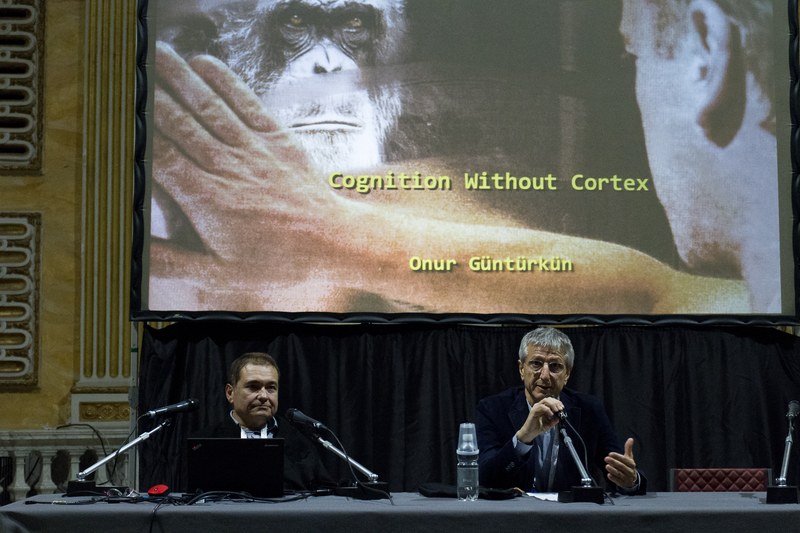 Onur GüntürkünRuhr University BochumConvergent evolution of the avian pallium, cortex-like canonical microcircuits in birds, Conscious birds synthesis (2025)
- Enrico AmicoSchool of Mathematics and Centre for Human Brain Health, University of BirminghamThe differential identifiability framework for brain fingerprints, connectome fingerprinting in Alzheimer's disease, time scales of brain identifiability
- Isabella R. BeckettCoauthor of the MaleCNS preprint comparing male and female Drosophila brain connectomes
- Stuart BergFirst author of the MaleCNS preprint on the male Drosophila central nervous system
-
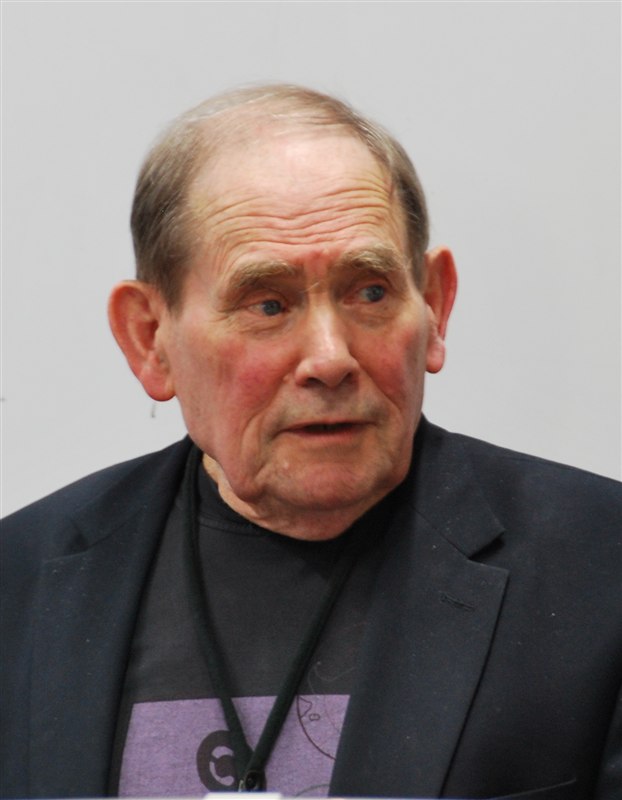 Sydney BrennerMRC Laboratory of Molecular Biology, CambridgeFounding the C. elegans research program, the 1986 connectome, the 2002 Nobel Prize in Physiology or Medicine
- H. Isaac ChenDepartment of Neurosurgery, Perelman School of Medicine, University of Pennsylvania, and Corporal Michael J. Crescenz VA Medical CenterTransplanting human brain organoids into injured adult cortex, structural and functional integration of organoid grafts with the visual system
Andreas Nieder is listed with the other brain scientists, who hold that the evidence comes from measured brains, and the ai question is left open. The positions themselves are set out in the index of consciousness theories. Every researcher covered on this site is indexed in the directory of consciousness researchers.