



Arvo Muñoz Morán
AI Cognition Institute; Rethink Priorities
Builder The claim is about what the hardware does, and the philosophy is left open
Position on AI consciousness
Muñoz Morán's work embodies the framework's stance that consciousness assessment should be a runnable computation with public inputs, not a verdict, and his implementation makes the credence dial turnable by anyone.
Arvo Muñoz Morán is the second-listed author of From Cacophony to Hierarchy and the builder of its implementation. The framework he co-authored with thirteen researchers from Google DeepMind, Oxford and Sussex defines AI consciousness assessment as a Bayesian computation, credences over five levels of functional description combined with 37 indicator activations carrying likelihood ratios, aggregated into a single credence. Muñoz Morán’s public code repository and the interactive tool at the AI Cognition Institute site make that computation runnable, which is what separates a framework from a proposal.
His affiliations mark the route the work has taken from philosophy into applied assessment. Rethink Priorities does welfare-focused research where moral status judgements under uncertainty are operational questions, and the AI Cognition Institute hosts the implementation. On the site’s taxonomy he is classified as a builder, covered for the tooling that turns the framework’s mathematics into a public artefact, and the classification follows the site’s rule that engineers and tool builders covered for what they built do not carry a philosophical position label.
Known for. Building the interactive implementation and public code for the cacophony AI consciousness assessment framework
Coverage on this site
Related researchers
- Shamil ChandariaGoogle DeepMind Institute; University of Oxford; Max Planck UCL Centre for Computational PsychiatryFree energy principle and active inference, the Beautiful Loop theory, the Complex Brain Hypothesis, lead author of the From Cacophony to Hierarchy AI consciousness assessment framework
-
 Anil SethSussex Centre for Consciousness Science, University of SussexThe beast machine hypothesis, and controlled hallucination as an account of perception
- Fernando E. RosasUniversity of Sussex, Imperial College London, University of Oxford, and PIBBSSCorresponding author of the BBS commentary on compatibilist emergence
- Murray ShanahanImperial College LondonGlobal workspace style cognitive architectures, Embodiment and the Inner Life, indicator properties for AI consciousness, LLM world models
-
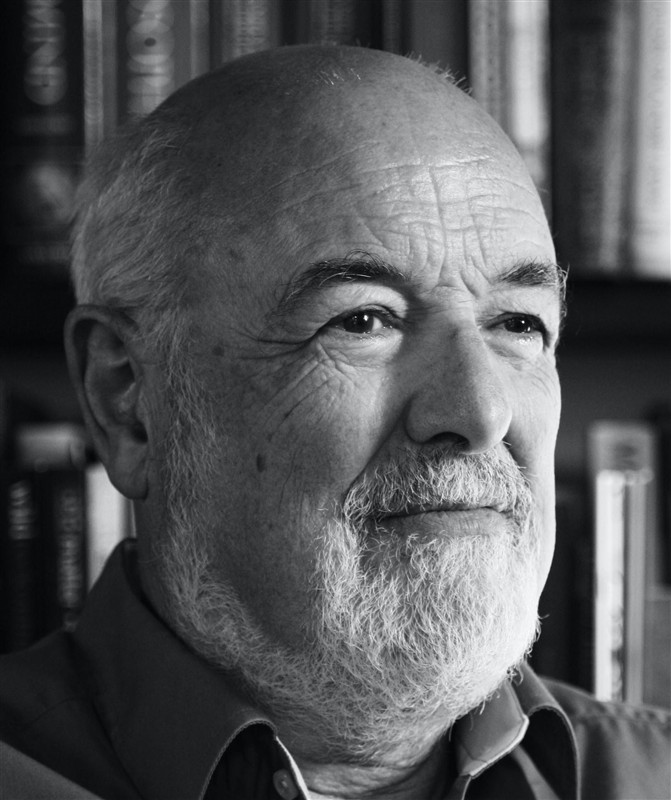 Chris FrithUniversity College LondonAgency and the sense of self, Making Up the Mind, metacognition and awareness, indicator properties collaboration
- Morten KringelbachDepartment of Psychiatry, University of Oxford; Centre for Eudaimonia and Human Flourishing, Linacre College, Oxford; Department of Clinical Medicine, Aarhus UniversityWhole-brain computational modeling of non-equilibrium brain dynamics, the thermodynamics of mind framework, hedonic and pleasure circuitry
Arvo Muñoz Morán is listed with the other builders, who hold that the claim is about what the hardware does, and the philosophy is left open. The positions themselves are set out in the index of consciousness theories. Every researcher covered on this site is indexed in the directory of consciousness researchers.