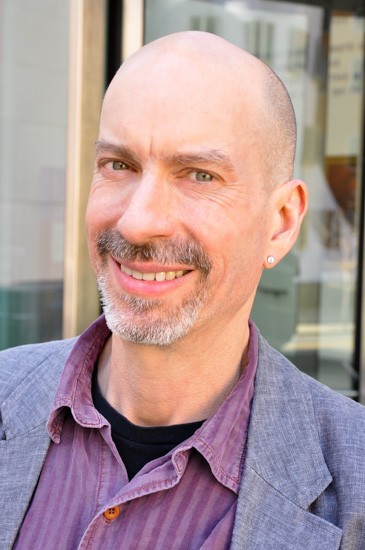
Earl K. Miller
Picower Institute for Learning and Memory, MIT
Biological naturalist Consciousness requires living metabolic hardware

Earl K. Miller is the Picower Professor of Neuroscience at the Picower Institute for Learning and Memory and the Department of Brain and Cognitive Sciences at the Massachusetts Institute of Technology. His research focuses on the neural mechanisms of executive function, working memory, category learning, and the dynamic coordination of the prefrontal cortex.
Miller’s laboratory challenged the classical doctrine that the brain operates exclusively through discrete point-to-point synaptic wiring diagrams. Through multi-site intracranial electrophysiological recordings in primates, his team demonstrated that neural ensembles are actively coordinated by large-scale oscillatory rhythms, including rhythmic interactions between beta and gamma bands, as well as macroscopic traveling electrical waves across cortical space.
In “Analog Cognition and Consciousness” (2026, Journal of Neuroscience, co-authored with Scott L. Brincat and Jefferson E. Roy), Miller formalizes the principle that continuous spatial-temporal electrical fields and ephaptic coupling perform analog computation in the brain. In this framework, traveling waves and their interference patterns dynamically sculpt neural representations, establishing global brain states necessary for conscious awareness and selective attention.
The strongest measured counterargument to a primary wave-generation role for fields is collected in the 2026 Neuron review by Lyle Muller and colleagues (his profile), which matches wave speeds to unmyelinated axon conduction and argues the in vitro field effects are too weak and too coarse to organize the effects the recordings show. This site presents that disagreement as open, and the two positions are laid out side by side in the traveling waves review analysis.
Known for. Prefrontal cortex dynamics, traveling waves, ephaptic field coupling, top-down cognitive control, and Analog Cognition and Consciousness (2026)
Coverage on this site
- PEM-UDE Learns Reduced-Order Equations for Neural Populations September 2026
- Mean-Field Theory of Rich Oscillatory Dynamics in Recurrent Networks September 2026
- Earl Miller Brainwave Consciousness Study. Analog Cognition and Traveling Waves August 2026
Related researchers
- Scott L. BrincatPicower Institute for Learning and Memory, MITElectrophysiology of primate prefrontal cortex, traveling oscillatory waves, and Analog Cognition and Consciousness (2026)
- Jefferson E. RoyPicower Institute for Learning and Memory, MITMulti-channel neurophysiology, spatial traveling wave dynamics, and Analog Cognition and Consciousness (2026)
- František BaluškaUniversity of BonnCellular consciousness, subcellular nanobrains, plant neurobiology, sentient cells as units of physiology
- Tristan A. BekinschteinDepartment of Psychology / Consciousness and Cognition Lab, University of CambridgeClinical biomarkers of consciousness, local-global auditory paradigm, transitions from wakefulness to sedation, neural dynamics of awareness
- Tomas Berjaga-BuisanComputational Neuroscience Group, Center for Brain and Cognition, Universitat Pompeu Fabra, BarcelonaNon-equilibrium thermodynamics of whole-brain models, fluctuation-dissipation theorem violations as a non-invasive consciousness marker
- Douglas BlackistonAllen Discovery Center at Tufts UniversityMemory stability during brain remodeling, xenobot platform design, amphibian memory transplantation work
Earl K. Miller is listed with the other biological naturalists, who hold that consciousness requires living metabolic hardware. The theory family behind that position is set out in the index of consciousness theories. Every researcher covered on this site is indexed in the directory of consciousness researchers.