



Marcus Hutter
Google DeepMind
Functionalist What matters is the organisation of the processing, not the material
Position on AI consciousness
Hutter treats intelligence as a formal, mathematisable property, and the 2026 framework he co-authored extends the same discipline to consciousness assessment, where credences and indicator likelihoods replace verbal verdicts.
Marcus Hutter is the author of the universal artificial intelligence programme that culminated in AIXI, the mathematically defined agent that maximises expected reward under Solomonoff induction over all computable environments. His long-running position is that intelligence is a formal property of systems, definable and measurable without reference to biology, and that the field progresses faster when its central concepts are given explicit mathematical structure. That stance made him one of the founders of formal AGI research, and his work with Shane Legg on definitions of intelligence remains the reference point for quantitative claims about capability.
His involvement in the 2026 consciousness framework follows the same logic applied to a harder target. From Cacophony to Hierarchy, co-authored with thirteen colleagues across Google DeepMind, Oxford and Sussex, defines an assessment procedure in which indicator evidence carries likelihood ratios and theoretical credences over five levels of functional description combine into a single credence. Hutter’s role in that collaboration carries the formalisation norm into consciousness science, where assessment has historically been conducted in prose. On the site’s taxonomy the resulting framework is functionalist in its methodological commitment, since it holds experience supervenes on organisation and leaves the substrate question as an explicit realisability constraint rather than a hidden assumption.
Known for. AIXI and universal artificial intelligence, algorithmic theories of intelligence and rational agency, co-author of the cacophony assessment framework
Coverage on this site
Related researchers
- Shamil ChandariaGoogle DeepMind Institute; University of Oxford; Max Planck UCL Centre for Computational PsychiatryFree energy principle and active inference, the Beautiful Loop theory, the Complex Brain Hypothesis, lead author of the From Cacophony to Hierarchy AI consciousness assessment framework
-
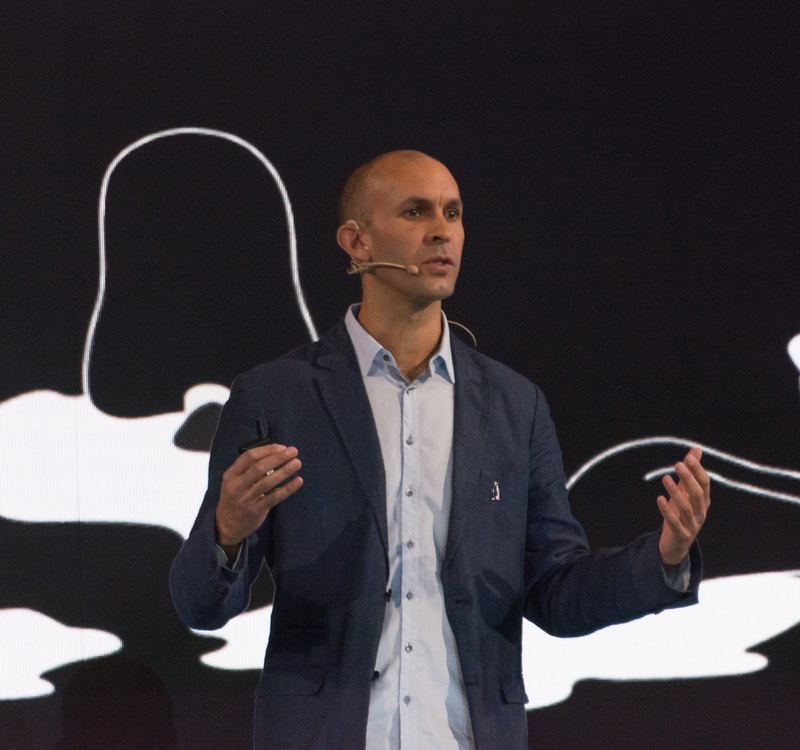 Anil SethSussex Centre for Consciousness Science, University of SussexThe beast machine hypothesis, and controlled hallucination as an account of perception
- Fernando E. RosasUniversity of Sussex, Imperial College London, University of Oxford, and PIBBSSCorresponding author of the BBS commentary on compatibilist emergence
- Murray ShanahanImperial College LondonGlobal workspace style cognitive architectures, Embodiment and the Inner Life, indicator properties for AI consciousness, LLM world models
-
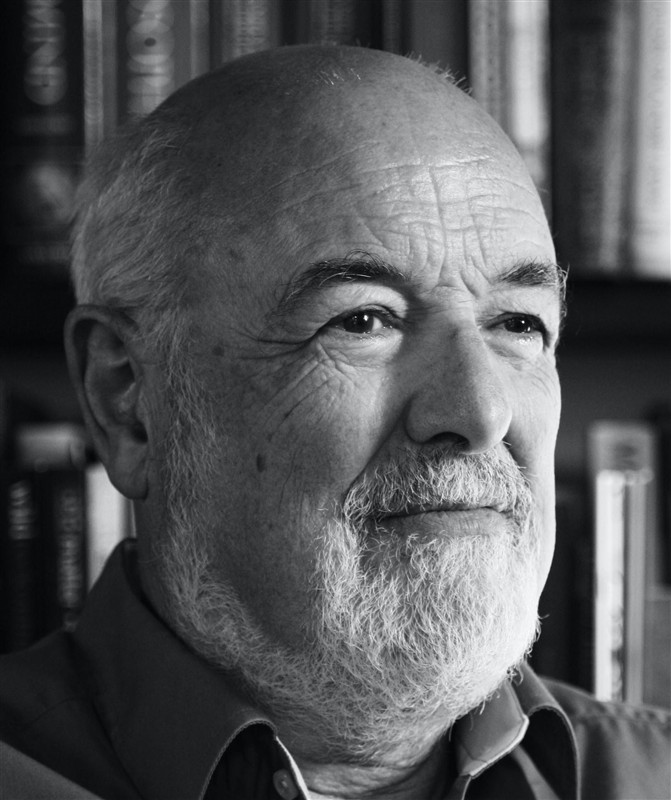 Chris FrithUniversity College LondonAgency and the sense of self, Making Up the Mind, metacognition and awareness, indicator properties collaboration
- Morten KringelbachDepartment of Psychiatry, University of Oxford; Centre for Eudaimonia and Human Flourishing, Linacre College, Oxford; Department of Clinical Medicine, Aarhus UniversityWhole-brain computational modeling of non-equilibrium brain dynamics, the thermodynamics of mind framework, hedonic and pleasure circuitry
Marcus Hutter is listed with the other functionalists and computationalists, who hold that what matters is the organisation of the processing, not the material. The theory family behind that position is set out in the index of consciousness theories. Every researcher covered on this site is indexed in the directory of consciousness researchers.