

Ruben Laukkonen
Centre for Eudaimonia and Human Flourishing, University of Oxford
Position on AI consciousness
Laukkonen argues that consciousness arises when a predictive system's generative model includes the model-making process itself, the circular strange loop structure of the Beautiful Loop theory.
Ruben Laukkonen is best known on this site for A Beautiful Loop, the active inference theory of consciousness he published with Karl Friston and Shamil Chandaria in Neuroscience and Biobehavioral Reviews in 2025. The theory’s central claim is geometric. Consciousness arises when a system’s predictions turn back upon themselves, when the generative model includes the model-making process as one of its variables, producing the self-referential structure that Hofstadter called a strange loop. The claim grounds experience in predictive processing rather than in any particular substrate, which is why the site’s active inference analysis treats it as the theory family’s sharpest recent formulation.
His broader research programme covers insight and belief updating, how restructuring changes what a system models, which connects the theory of consciousness to the psychology of learning. In 2026 he joined the fourteen-author framework From Cacophony to Hierarchy, where the measurement layer places predictive processing among the computational-functional theories at level 2 of the hierarchy while leaving its organismic and enactivist readings available at higher levels. On the site’s taxonomy he sits in the predictive processing family, and his presence in both collaborations makes him one of the few researchers linking the free energy programme directly to AI consciousness assessment methodology.
Known for. A Beautiful Loop, the active inference theory of consciousness with Friston and Chandaria, research on insight and belief updating
Coverage on this site
Related researchers
- Shamil ChandariaGoogle DeepMind Institute; University of Oxford; Max Planck UCL Centre for Computational PsychiatryFree energy principle and active inference, the Beautiful Loop theory, the Complex Brain Hypothesis, lead author of the From Cacophony to Hierarchy AI consciousness assessment framework
-
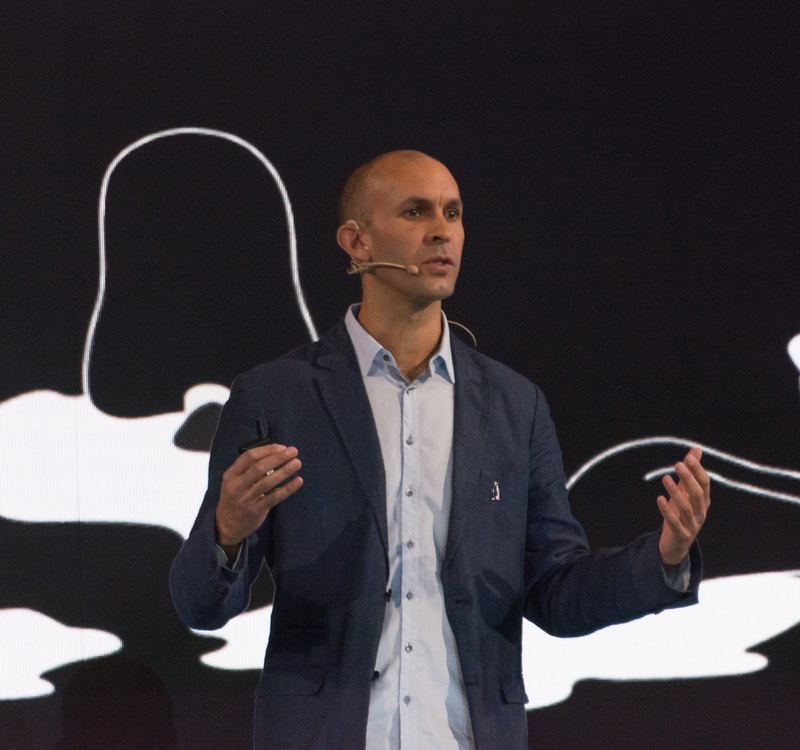 Anil SethSussex Centre for Consciousness Science, University of SussexThe beast machine hypothesis, and controlled hallucination as an account of perception
- Fernando E. RosasUniversity of Sussex, Imperial College London, University of Oxford, and PIBBSSCorresponding author of the BBS commentary on compatibilist emergence
- Murray ShanahanImperial College LondonGlobal workspace style cognitive architectures, Embodiment and the Inner Life, indicator properties for AI consciousness, LLM world models
-
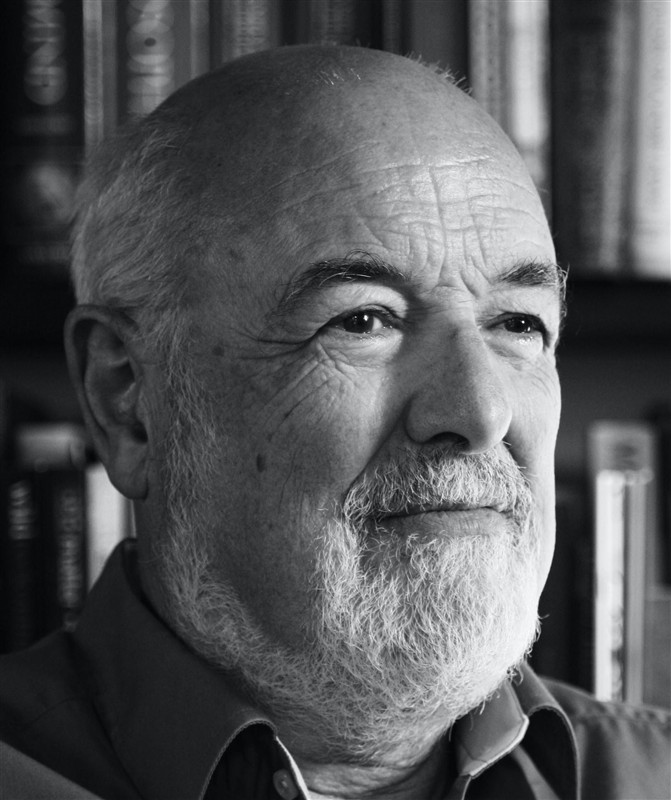 Chris FrithUniversity College LondonAgency and the sense of self, Making Up the Mind, metacognition and awareness, indicator properties collaboration
- Morten KringelbachDepartment of Psychiatry, University of Oxford; Centre for Eudaimonia and Human Flourishing, Linacre College, Oxford; Department of Clinical Medicine, Aarhus UniversityWhole-brain computational modeling of non-equilibrium brain dynamics, the thermodynamics of mind framework, hedonic and pleasure circuitry
Every researcher covered on this site is indexed in the directory of consciousness researchers.