



Shane Legg
Google DeepMind
Functionalist What matters is the organisation of the processing, not the material
Position on AI consciousness
Legg's position is that capability claims need formal definitions, and the 2026 framework he co-authored applies that standard to consciousness, producing credences over functional levels instead of verbal verdicts.
Shane Legg co-founded Google DeepMind with Demis Hassabis and Mustafa Suleyman, and his work on the mathematical definition of intelligence with Marcus Hutter supplied the field’s most cited formal measure, intelligence as expected reward maximisation across environments. His AGI forecasting work, including the long-running probability estimates for human-level machine intelligence, established the practice of stating capability timelines as explicit credences rather than predictions. That history makes him a natural participant in the 2026 consciousness framework.
From Cacophony to Hierarchy, co-authored with thirteen colleagues across Google DeepMind, Oxford and Sussex, extends credence-based thinking from capability to consciousness. The framework places rival theories at levels of functional description, takes indicator evidence with likelihood ratios, and returns a probability that shifts with the user’s stated theoretical weights. Legg’s involvement signals that capability-side researchers are engaging consciousness assessment with the same formality they apply to capability claims. The framework’s supervenience commitment places it in the functionalist family, with substrate-dependent positions carried as explicit realisability constraints.
Known for. Co-founder of Google DeepMind, mathematical definitions of intelligence with Marcus Hutter, AGI forecasting, co-author of the cacophony assessment framework
Coverage on this site
Related researchers
- Shamil ChandariaGoogle DeepMind Institute; University of Oxford; Max Planck UCL Centre for Computational PsychiatryFree energy principle and active inference, the Beautiful Loop theory, the Complex Brain Hypothesis, lead author of the From Cacophony to Hierarchy AI consciousness assessment framework
-
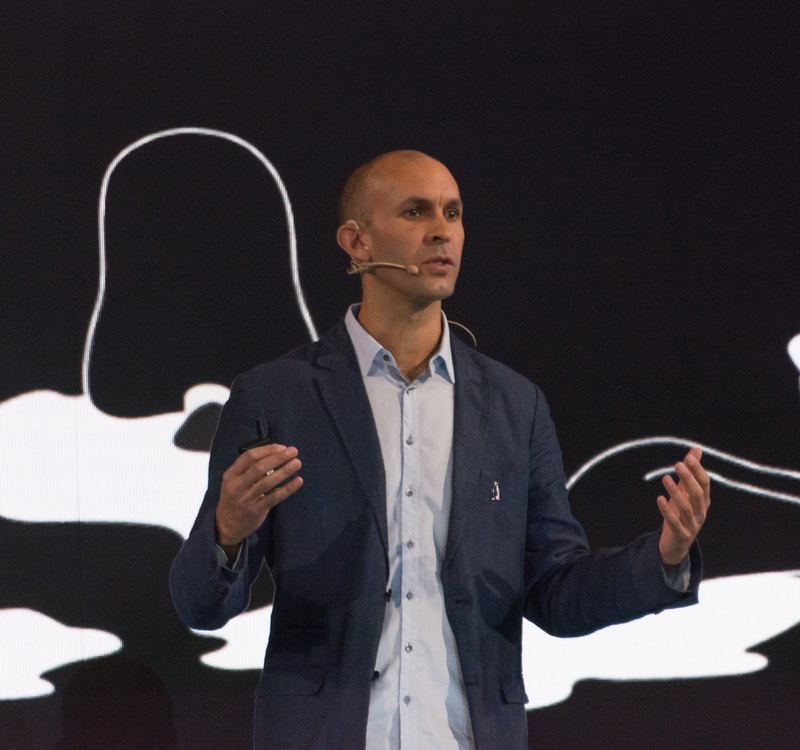 Anil SethSussex Centre for Consciousness Science, University of SussexThe beast machine hypothesis, and controlled hallucination as an account of perception
- Fernando E. RosasUniversity of Sussex, Imperial College London, University of Oxford, and PIBBSSCorresponding author of the BBS commentary on compatibilist emergence
- Murray ShanahanImperial College LondonGlobal workspace style cognitive architectures, Embodiment and the Inner Life, indicator properties for AI consciousness, LLM world models
-
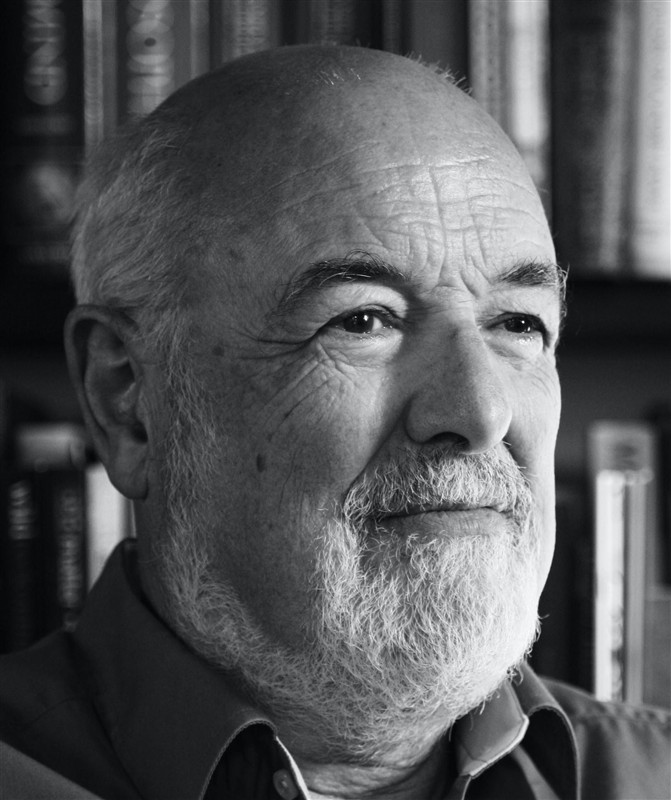 Chris FrithUniversity College LondonAgency and the sense of self, Making Up the Mind, metacognition and awareness, indicator properties collaboration
- Morten KringelbachDepartment of Psychiatry, University of Oxford; Centre for Eudaimonia and Human Flourishing, Linacre College, Oxford; Department of Clinical Medicine, Aarhus UniversityWhole-brain computational modeling of non-equilibrium brain dynamics, the thermodynamics of mind framework, hedonic and pleasure circuitry
Shane Legg is listed with the other functionalists and computationalists, who hold that what matters is the organisation of the processing, not the material. The theory family behind that position is set out in the index of consciousness theories. Every researcher covered on this site is indexed in the directory of consciousness researchers.