


Mae-Wan Ho
Open University and Institute of Science in Society
Quantum Consciousness depends on physics classical computers do not reproduce
Position on AI consciousness
Ho held that living organisms achieve rapid whole-body coordination through liquid-crystalline bioelectrodynamic coherence, positioning biological organization as fundamentally distinct from classical digital computation.
Mae-Wan Ho was a geneticist and biophysicist who investigated non-genetic inheritance, developmental responses to weak magnetic fields in Drosophila embryos, and optical birefringence in living tissues. With Fritz-Albert Popp and Ulrich Warnke, she co-edited Bioelectrodynamics and Biocommunication (1994), bringing together experimental and theoretical work on electromagnetic signaling across living systems.
Ho argued that conventional molecular biology overlooks the physical continuity of the extracellular matrix, cytoskeleton, and structured cellular water. Using polarized light microscopy on living organisms, she proposed that living bodies function as coherent liquid-crystalline media capable of rapid, low-dissipation energy transfer and global coordination.
Her framework challenges purely mechanistic, silicon-first models of mind by tying biological agency closely to thermodynamic and electrodynamic coherence. While many of her stronger quantum-coherence claims remain unverified by mainstream biophysics, her synthesis occupies a distinctive place in the lineage connecting bioelectricity to debates over living substrates.
Known for. Bioelectrodynamics and Biocommunication, liquid-crystalline organisms, and quantum coherence in biology
Coverage on this site
Related researchers
- Fritz-Albert PoppInternational Institute of Biophysics, NeussUltraweak photon emission (biophotons) and coherent optical signaling in living organisms
- Harald AtmanspacherCollegium Helveticum / ETH ZurichDual-Aspect Monism (Pauli-Jung conjecture), Quantum Interaction, contextual emergence, Models of Consciousness (MOC) co-organizer
- Anirban BandyopadhyayNational Institute for Materials Science (NIMS), JapanMicrotubule quantum resonance, terahertz oscillations in biology, quantum biology of consciousness
-
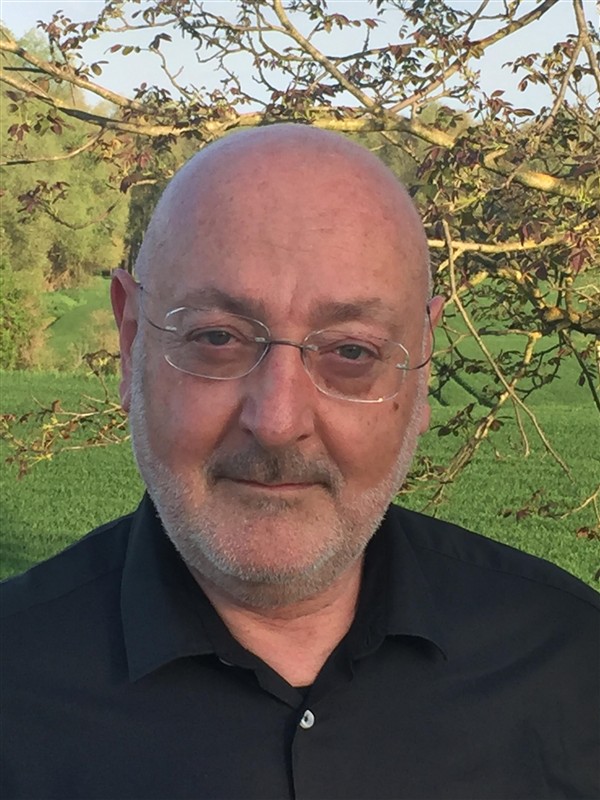 Giacomo Mauro D'ArianoUniversity of PaviaQuantum information foundations of physics, deriving quantum theory from informational axioms, Quantum Information Panpsychism with Federico Faggin
-
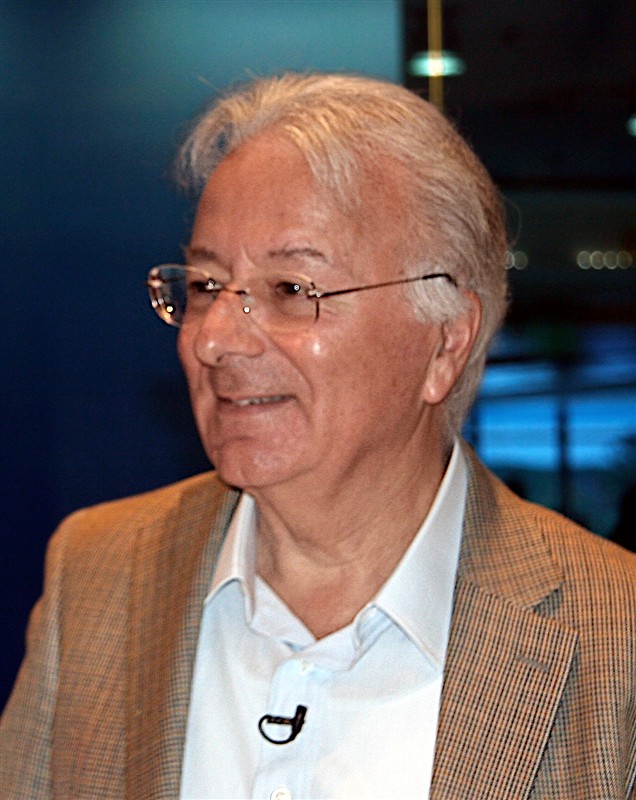 Federico FagginFederico and Elvia Faggin FoundationInventing the microprocessor, Quantum Information Panpsychism, Irreducible, the argument that classical computers cannot be conscious
- Matthew FisherUniversity of California, Santa BarbaraQuantum cognition via nuclear spins, phosphorus as a neural qubit, Posner molecules, condensed matter physics applied to the brain
Mae-Wan Ho is listed with the other quantum theorists, who hold that consciousness depends on physics classical computers do not reproduce. The theory family behind that position is set out in the index of consciousness theories. Every researcher covered on this site is indexed in the directory of consciousness researchers.